What Trouble Taught Me About Who God Is (Psalm 45-48)
What do you do when you find yourself in troubling times? Scripture describes God as a refuge and one to turn to in these moments

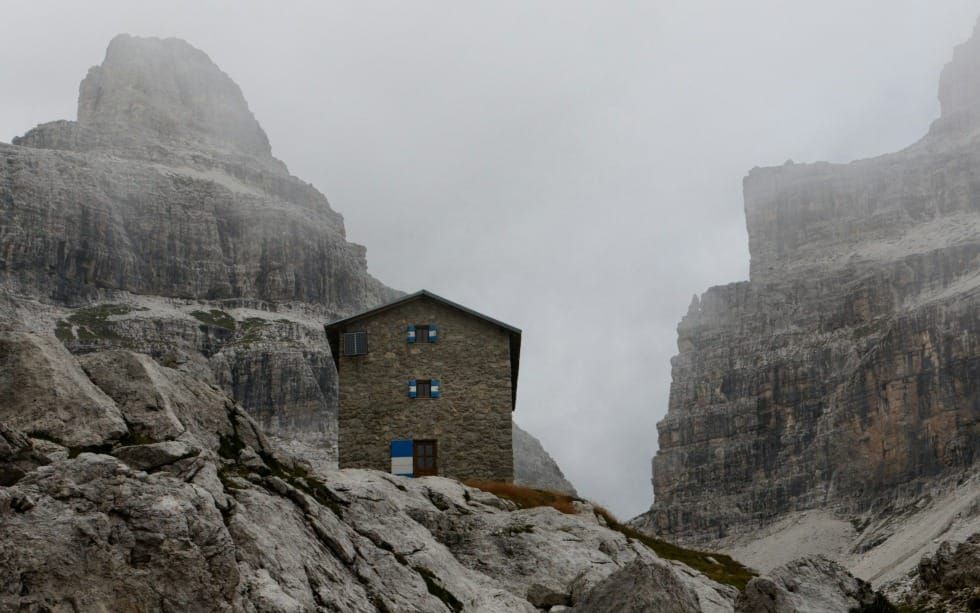
Psalm 45-48
Today's Scripture Passage
A Few Thoughts to Consider
Who do you turn to when you’re in trouble?
The answer to this question makes or breaks what a person becomes, and there might be no better passage in Scripture to turn to than Psalm 46. As the NIV Application commentary notes, “Psalm 45’s celebration of a royal marriage is followed by three psalms that focus on God’s reign over the earth from the city of Jerusalem.[1] In Psalm 46, we read the following:
1 God is our refuge and strength,
a helper who is always found
in times of trouble.
2 Therefore we will not be afraid,
though the earth trembles
and the mountains topple
into the depths of the seas,
3 though its water roars and foams
and the mountains quake with its turmoil.
In the Old Testament, God is referred to as our refuge nearly a hundred times. He is the place we are to run to when we are afraid, and this idea of refuge is baked into the creation narrative. Gerald Wilson notes, “Yahweh established the stable environment for human existence—the earth—at creation by an act of sovereign control and limitation of chaotic waters. He established an orderly universe by creating and enforcing boundaries for these waters so that dry land appeared as a place where humans and land animals could live.”[2] But as Wilson goes on to say,
The Flood (Gen. 6–9) threatened to dissolve creation order into precreation chaos by allowing these restricted waters to exceed and ultimately erase their established boundaries. Similarly here in Psalm 46, human existence would be threatened with dissolution if the roaring, surging seas and waters were able to topple the mountains into the sea so that the earth would “give way.” In the Mesopotamia account of the Flood, the gods cower in fear behind the walls of their heavenly abode as the chaotic waters—unleashed in a fit of pique against humans—threaten to destroy the gods as well. In Psalm 46, however, the psalmist claims a confident trust in Yahweh that allows contemplation of the ultimate destruction of creation without fear.[3]
Thus, the reason this psalmist can be confident is because he trusts in a God who has always been a refuge for his people. He stands strong when the flood waters of life rage. As Peter Craigie says, “The language of confidence here is rooted in creation, for God’s order emerged from primeval chaos (Gen 1:1–2).”[4] This is some captivating imagery, and as Craigie points out, “God’s creation (Exod 15:17) of Israel had also been a consequence of his control of the chaotic waters, by which he conquered Pharaoh and redeemed his people (Exod 15:1–10); hence the psalmist now turns from confidence in the face of natural chaotic forces, to confidence in the face of national threats.”[5]
In short, God has been and will always be a God of refuge. When our body is broken, we’re rejected by people, and life feels out of control, we can come to him.
❤️ Enjoy what you’re reading?
Consider supporting The Monday Christian. For a dollar a month, given as a simple one-time donation, you help keep this ministry free and growing for every reader.
Support TMCA Meditation to PRAY
Praise | Lord, I praise you for being our refuge and strength, an ever-present help in trouble, as declared in Psalm 46. Your power and presence offer peace even when the earth gives way and the mountains fall into the sea. Thank you for the assurance that you are with us, the God of Jacob is our fortress.
Release | I release my fears and anxieties to you, Lord. In moments of chaos and uncertainty, I sometimes cling to my worries instead of trusting in your protection. Help me let go of my need to control the outcomes and rely fully on your strength and guidance.
Ask | I ask you, Lord, to help me remember that you are always near, ready to be found during trials. Teach me to be still and know that you are God, exalted among the nations, exalted in the earth. Help me to find solace and strength in your presence, especially in times of upheaval.
Yield | I yield to your sovereignty over all creation. As you calm raging waters and melt the earth with your voice, I trust in your power to manage the complexities of my life. Lead me to live as a testament to your peace and stability, showing others your love through my faithfulness.
A Challenge to Act Like Christ
It was this Psalm that inspired Martin Luther to write the words to this powerful hymn, A Mighty Fortress. In Verse 2, he writes these words:
Did we in our own strength confide,
our striving would be losing,
were not the right Man on our side,
the Man of God's own choosing.
You ask who that may be?
Christ Jesus, it is he;
Lord Sabaoth his name,
from age to age the same;
and he must win the battle.
For Christians, our hope is in Christ. He is the one we run to when the storms of life rage. Because of him, we have his promise in Matthew 28:20 that “I am with you always, to the end of the age.” As the NIV Application Commentary notes, “In the midst of our tumultuous, chaotic modern world, Psalm 46 reminds us that God can calm the raging seas and the trembling mountains and turn them to rivers of life and calm dwelling places. All that is required of us is that we stand still and acknowledge the God who is with us.”[6]
This begs the question: Have you ever fully trusted God as your refuge? Not as someone you consult with or pray to, but as someone with whom you place your entire hope. When life gets hard, is your natural default to run to God, or do you turn to something else to dull the pain?
To make God your refuge means you trust in him like you would trust in a storm shelter during a hurricane or tornado. You recognize that your only option to remain safe is to abide in him. There are no alternatives. Only as you trust God like this do you start to enjoy the riches of the Christian life.
*Unless you specify otherwise, comments and questions you ask may be featured in upcoming podcast episodes.
[1]Nancy Declaissé-Walford, Rolf A. Jacobson, and Beth Laneel Tanner, The Book of Psalms, New International Commentary on the Old Testament. Accordance electronic ed. (Grand Rapids: Eerdmans, 2012), 421.
[2]Gerald H. Wilson, Psalms Volume 1, The NIV Application Commentary. Accordance electronic ed. (Grand Rapids: Zondervan, 2002), 716.
[3]Gerald H. Wilson, Psalms Volume 1, The NIV Application Commentary. Accordance electronic ed. (Grand Rapids: Zondervan, 2002), 716.
[4] Peter C. Craigie, Psalms 1–50, 2nd ed., vol. 19, Word Biblical Commentary (Nashville, TN: Nelson Reference & Electronic, 2004), 344.
[5] Peter C. Craigie, Psalms 1–50, 2nd ed., vol. 19, Word Biblical Commentary (Nashville, TN: Nelson Reference & Electronic, 2004), 344.
[6]Nancy Declaissé-Walford, Rolf A. Jacobson, and Beth Laneel Tanner, The Book of Psalms, New International Commentary on the Old Testament. Accordance electronic ed. (Grand Rapids: Eerdmans, 2012), 426.