When a Painting Became a Doorway to God

It was 2019 when I picked up a book that changed me. I honestly don't recall another book that has impacted me so deeply. I went back through my journals to recall everything I felt during that time—I needed to understand what had resonated so profoundly.
As I look back, I realize I read it during a rough season in ministry when we felt misunderstood, rejected, and trapped, with no way out. The healing the Lord has brought me through makes it difficult to imagine feeling the way I once did. All glory goes to Him.
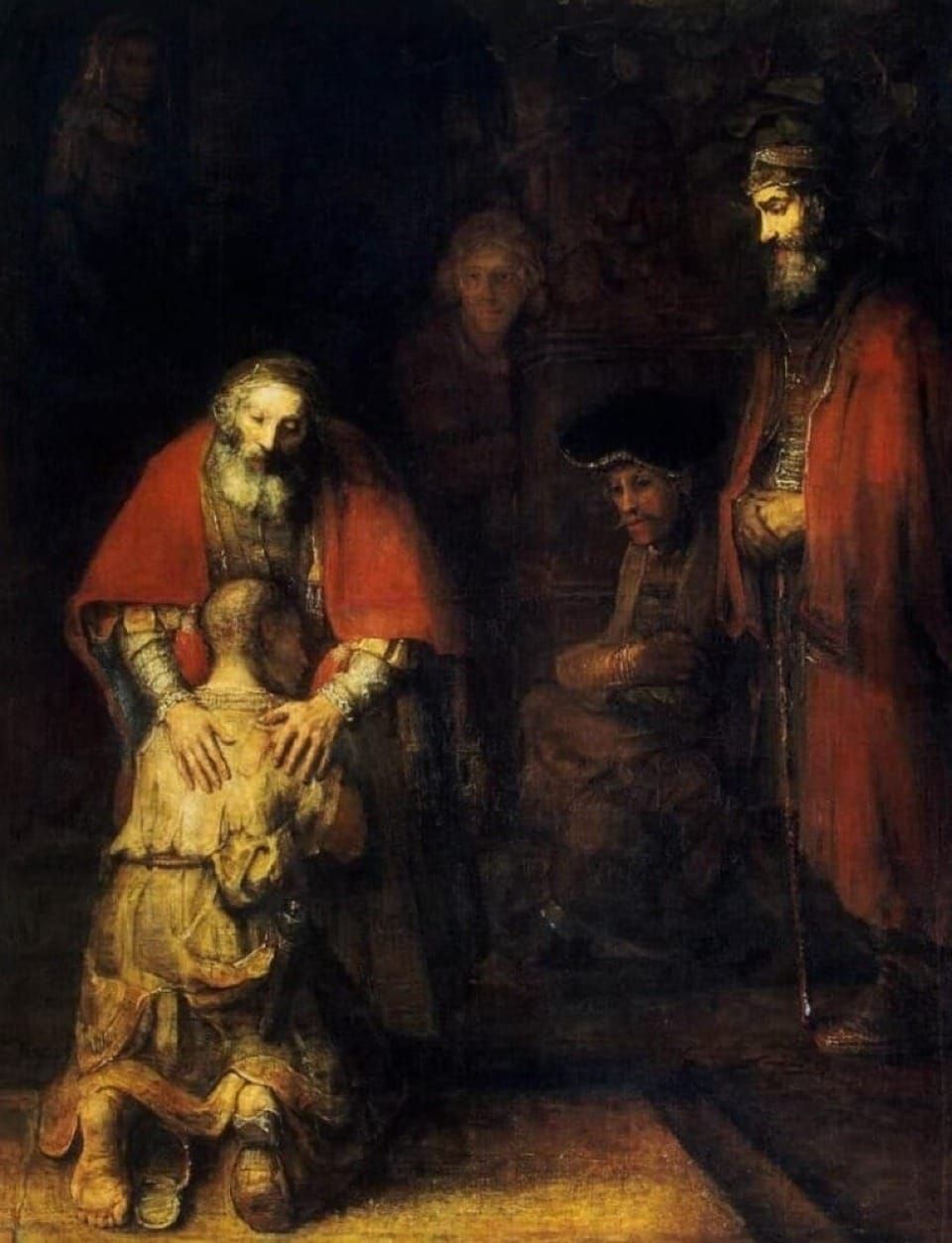
At the heart of this story is The Return of the Prodigal Son by Henri Nouwen, a priest who experiences a profound spiritual awakening when he discovers Rembrandt's masterpiece—a painting inspired by the biblical parable in Luke 15.
The Story
Do you recall the account in Luke 15 about a man with two sons? The younger son asks for his inheritance early, leaves home, and squanders everything through reckless living. Broken and humiliated, he returns home, hoping to work as a servant, since he no longer feels worthy to be called a son.
His father sees him coming and runs to embrace him, welcoming him back with love and forgiveness. The older son, who stayed home and served faithfully, becomes angry, feeling his loyalty is unappreciated.
The father responds with these words:
My son, you are always with me, and everything I have is yours. But we had to celebrate and be glad, because this brother of yours was dead and is alive again; he was lost and is found.¹
I love this story because it ultimately points us to Jesus and how willing and ready He is to welcome us back into His loving arms, even after we fail over and over.
Encounter with a Painting
Henri discovered Rembrandt's painting in the fall of 1983 in the village of Trosly, France, where he was spending time at L'Arche, a community for people with developmental disabilities. When he first saw this painting, he couldn't look away. He was in a depleted, exhausted state after a demanding six-week lecture tour across the United States.
Henri writes:
It was in this condition that I first encountered Rembrandt's Prodigal Son. My heart leaped when I saw it. The tender embrace of father and son expressed everything I desired at that moment. I was indeed the son, exhausted from long travels; I wanted to be embraced; I was looking for a home where I could feel safe. The son-come-home was all I was and all that I wanted to be. For so long, I had been going from place to place, confronting, beseeching, admonishing, and consoling. Now I desired only to rest safely in a place where I could feel a sense of belonging, a place where I could feel at home.²
Rembrandt's painting transformed Henri Nouwen, launching a spiritual journey in which each figure revealed fractures in his own soul, crying out for healing. And as I read his story, I discovered it would transform me too.
The Younger Son
The image of the father's weathered hands resting on the son's shoulders pierced Henri's heart. He recognized himself in the exhausted, prodigal son—a man who had spent decades traveling, ministering, and seeking validation, only to find himself spiritually depleted and longing for home, belonging, and unconditional love.
For Henri, Rembrandt's painting was far more than art; it was a visual incarnation of the Gospel itself.
As I read, I began to recognize my own story in his. Like Henri, I was seeking validation from people who couldn't give it. I desperately sought their love and attention, and it made me miserable. I would look around and see how blessed I was—a loving husband, two healthy children, a sweet dog, a nice home, and a lifelong dedication to ministry—and yet I still felt rejected and misunderstood.
The deeper I got into this book, the more I understood Henri's journey. He had taught at Notre Dame, Yale Divinity School, and Harvard Divinity School. Yet none of that mattered when it came down to his soul needing healing. And none of my own accomplishments could satisfy the longing in my soul or the need for deep Holy Spirit healing.
I was seeing areas of my heart that desperately needed work, and the further I read, the more exposed I felt.
The Elder Son
As Henri shifted his attention to the elder son in the painting, he recognized himself again. He realized he had spent much of his life trying to do everything right while quietly seeking recognition. Accustomed to being good, he found himself judging those who weren't. Once again, Henri's reflections helped me recognize my own weaknesses and identify with the elder son.
I recognized that when I sought affirmation from those I felt owed it to me and didn't receive it, I felt resentful and wounded. At times, I even felt rejected.
What I know now is that the Lord was teaching me something essential: to look to Him for my worth. I am created in the image of God, and every time I look to someone else to validate me, I lose sight of that truth.
Throughout this journey of surrender, as I recognized areas of woundedness that only the Holy Spirit could heal, I painstakingly turned it all over to Him. It wasn't an overnight transformation, but gradually, the woundedness began to heal.
The Father
My favorite section of the book is Henri's meditation on the Father welcoming his son home with open arms. I could barely see the words through my tears. I was struck by how desperately I wanted to become more like the Father, and how far I still was from embodying his love.
Too many times, I wanted reciprocation, repayment, or explanation. That is not love.
The Holy Spirit gently guided me through this process and pointed me to the Cross, where He was spat upon, suffered, and died for me—for you. He asked for nothing in return.
How? How does one do that?
"But Lord, I've offered everything to this person and shown them kindness, grace, and love. Why do they reject me?"
I would often pray this, and every time He would point me to the cross.
One time, a friend shared that her husband chose to wash the feet of his biggest critic at a church foot-washing service. I struggled with that story because I knew what this critic had done to him. But Jesus did this all the time, expecting nothing in return.
As Henri sat with the painting over the years, his understanding deepened. He began to see how he could love others like a Father. He writes: "And still, after a long life as a son, I know for sure that the true call is to become a father who only blesses in endless compassion, asking no questions, always giving and forgiving, never expecting anything in return."³
Do You See Yourself?
As you look at this painting, do you see yourself in any of the characters? Maybe you see a little of yourself in all of them, like Henri and I did.
Can I encourage you to ask the Lord to reveal any areas of your heart that might need healing?
Are you able to freely give and offer love to those who don't return it? If not, let me point you to the Cross. Jesus is our greatest example of love poured out without need for anything in return.
The mature spiritual life means moving beyond resentment, woundedness, and the need for validation—and becoming a person who offers mercy, patience, and healing to others.
With so much gratefulness in my heart, I can say it's difficult to remember how wounded I was seven years ago because of the deep healing God has done. I now go to Jesus immediately when I feel rejected or overlooked. I know what to do, and I know what will truly satisfy me.
Only Jesus. He is enough.
- Luke 15:31–32 (NIV), BibleGateway.
- Henri J. M. Nouwen, The Return of the Prodigal Son: A Story of Homecoming (New York: Doubleday, 1992), 5.
- Ibid., 137–138.