
What Deuteronomy Teaches Me About God’s Character? (Deuteronomy 1-4)
Why did Jesus quote Deuteronomy more than any other book? This covenant call to obedience reveals God's heart and sets the stage for faithful living.

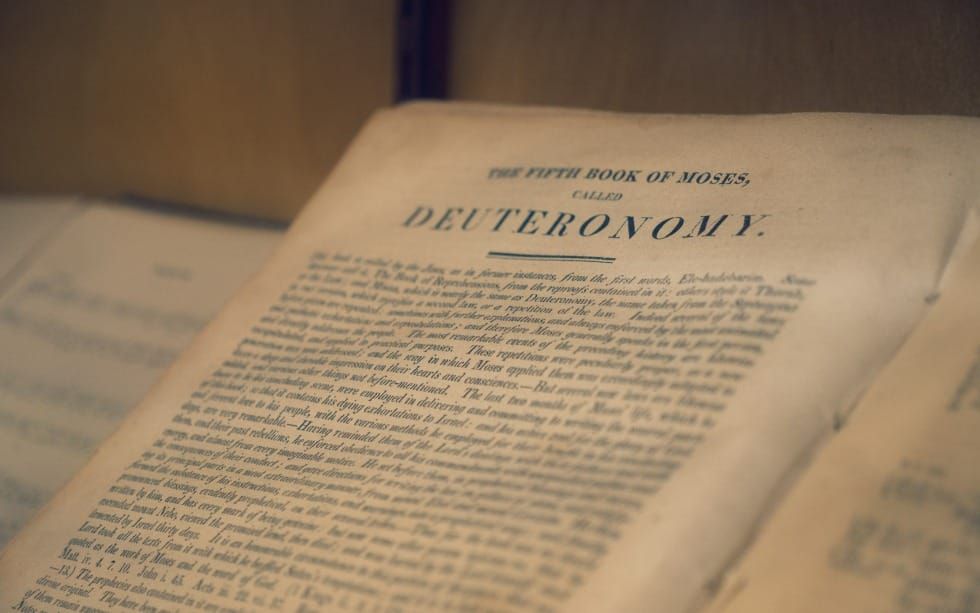
Deuteronomy 1-4
Today's Scripture Passage
A Few Thoughts to Consider
Why did God give us the book of Deuteronomy?
“The book of Deuteronomy can rightly be called a compendium of the most important ideas of the Old Testament.”[1] The central theme of Deuteronomy revolves around the renewal of the covenant between God and the Israelites. As the leader and mediator, Moses emphasizes the importance of obedience to God's commandments, the consequences of disobedience, and the blessings that come with faithfulness. Deuteronomy is a call to faith and commitment, urging the Israelites to uphold their covenant with God as they prepare to enter the Promised Land.
Bill Arnold makes the following helpful observations. He notes that “Deuteronomy crystallizes the themes and messages of the first four books of the Bible, while at the same time it establishes the theological foundation for the books of history and prophecy to follow.”[2] “Deuteronomy is truly a solid fulcrum by means of which one gains a clearer insight into the message of the entire Old Testament.”[3]
As for the breakdown of this book, Arnold notes, “Early in the history of scholarship on the book, interpreters of Deuteronomy observed that its recurring self-references create a system of four superscriptions, dividing the book into speech, law, covenant, and blessing.”[4] We notice these four superscriptions in the following verses:
- Speech | “These are the words Moses spoke to all Israel.” – Deuteronomy 1:1
- Law | “This is the law Moses gave the Israelites.” – Deuteronomy 4:44
- Covenant | “These are the words of the covenant that the Lord commanded Moses to make with the Israelites.” – Deuteronomy 29💯
- Blessing | “This is the blessing that Moses, the man of God, gave the Israelites before his death.” – Deuteronomy 33:1
The structure of Deuteronomy revolves around three speeches by Moses. As Arnold notes, “The first speech combines a historical review with a sermon (1:6–4:40), the second presents the Torah for Israel (5:1–29:1 [Heb. 5:1–28:69]), and the third speech ratifies a covenant ceremony on the plains of Moab (29:2–30:20 [Heb. 29:1–30:20]).” Arnold goes on to say, “These speeches are introduced, framed, and sometimes interrupted by brief narrative notations, and followed finally by narratives and poems related to the death of Moses (31:1–34:12).”[5]
In Deuteronomy 1-4, Moses gives a speech to the people and recounts the Israelites' journey from Mount Sinai to the plains of Moab. He reflects on their history, reminding them of God's guidance and provision. Moses emphasizes the need for obedience to God's commandments, recounting instances of disobedience and its consequences. The section serves as a foundation for the covenant renewal, setting the stage for the Israelites to enter the Promised Land with a renewed commitment to follow God's laws. Deuteronomy 4:1-4 is one of the critical parts of Moses’ speech,
“Now, Israel, listen to the statutes and ordinances I am teaching you to follow, so that you may live, enter, and take possession of the land the Lord, the God of your ancestors, is giving you. 2 You must not add anything to what I command you or take anything away from it, so that you may keep the commands of the Lord your God I am giving you. 3 Your eyes have seen what the Lord did at Baal-peor, for the Lord your God destroyed every one of you who followed Baal of Peor. 4 But you who have remained faithful to the Lord your God are all alive today.
A Meditation to PRAY
Praise | I praise you for your enduring statutes and judgments. Your words testify to your steadfast love and commitment to guiding your people toward a life of obedience and blessing.
Release | You have made your will known. Help me to live in obedience to you. I release my inclination to do things my way. As the Israelites were cautioned against idolatry, I, too, surrender any idols in my heart, anything that might lead me away from your presence and your truth.
Ask | I ask for the strength and determination to cling to your commandments. Give me the courage to stand firm in your ways, remembering the lessons of those who remained faithful and witnessed your blessings.
Yield | I yield to you, trusting in your perfect plan for my life. May my heart remain steadfast in your word, and may my soul be vigilant against temptation. Lead me in the path of righteousness.
A Challenge to Act Like Christ
It’s significant to note that Jesus quoted more from the book of Deuteronomy than any other book in the Bible. In Luke 4, when he is tempted three times by Satan, Jesus responds to each of these temptations with a quote from Deuteronomy. As the creators of The Bible project note:
Jesus’ testing in the wilderness is preparation for the promised land, just as Israel’s wilderness wanderings. Both Jesus and the Israelites’ testing narratives echo an even older story: Adam and Eve in the garden. Israel gets an opportunity to become a new Adam and Eve and demonstrate trust in Yahweh that will result in Eden blessing for them and other nations—but they fail. Jesus becomes both the faithful Israelite and God’s faithful image-bearer who passes the test and opens up Eden blessings for all humanity.[6]
Jesus obviously thought this book was very important, and this should cause us to take it seriously. Through Jesus, we understand how to read Deuteronomy in context. Salvation comes by grace through faith in Jesus Christ alone, “who has perfectly obeyed the law in our place. For those who are saved, the law now functions as a guide to meaningful, joy-filled life in God’s world.”[7] As Paul Copan notes, “Like Jesus (Matt. 19:8), Paul knew that the law was not ideal. To use N. T. Wright’s image, the law was like a booster rocket to establish Israel in its nationhood, theology, institutions, and practices that paved the way for the Messiah and the creation of an interethnic people; once the law’s purpose had been accomplished, it was set aside.”[8]
Today, we don’t live under the same civil and ceremonial instructions of those in Moses’ day, but through reading Deuteronomy, we gain a clearer understanding of the moral character of God and the principles by which we should live.
[1]Bill T. Arnold, The Book of Deuteronomy, Chapters 1–11, New International Commentary on the Old Testament. Accordance electronic ed. (Grand Rapids: Eerdmans, 2022), 1.
[2]Bill T. Arnold, The Book of Deuteronomy, Chapters 1–11, New International Commentary on the Old Testament. Accordance electronic ed. (Grand Rapids: Eerdmans, 2022), 1.
[3]Bill T. Arnold, The Book of Deuteronomy, Chapters 1–11, New International Commentary on the Old Testament. Accordance electronic ed. (Grand Rapids: Eerdmans, 2022), 2.
[4]Bill T. Arnold, The Book of Deuteronomy, Chapters 1–11, New International Commentary on the Old Testament. Accordance electronic ed. (Grand Rapids: Eerdmans, 2022), 5.
[5]Bill T. Arnold, The Book of Deuteronomy, Chapters 1–11, New International Commentary on the Old Testament. Accordance electronic ed. (Grand Rapids: Eerdmans, 2022), 2.
[6] “Which Laws Still Apply?” The Bible Project, accessed January 20, 2024, https://bibleproject.com/podcast/which-laws-still-apply/#:~:text=The%20laws%20are%20part%20of,the%20pitfalls%20of%20human%20nature.
[7]Bryan Chapell, eds. Gospel Transformation Study Bible Notes. Accordance electronic ed. (Wheaton: Crossway, 2013), paragraph 1001.
[8] Paul Copan, “Greg Boyd’s Misunderstandings of the ‘Warrior God,” The Gospel Coalition, accessed January 20, 2024, https://www.thegospelcoalition.org/reviews/crucifixion-warrior-god-greg-boyd/.