What Bekele Shanko Taught Me About Partnership
“A person who knows how to partner with others is like a miner who discovers a rich vein of gold.” - Bekele Shanko


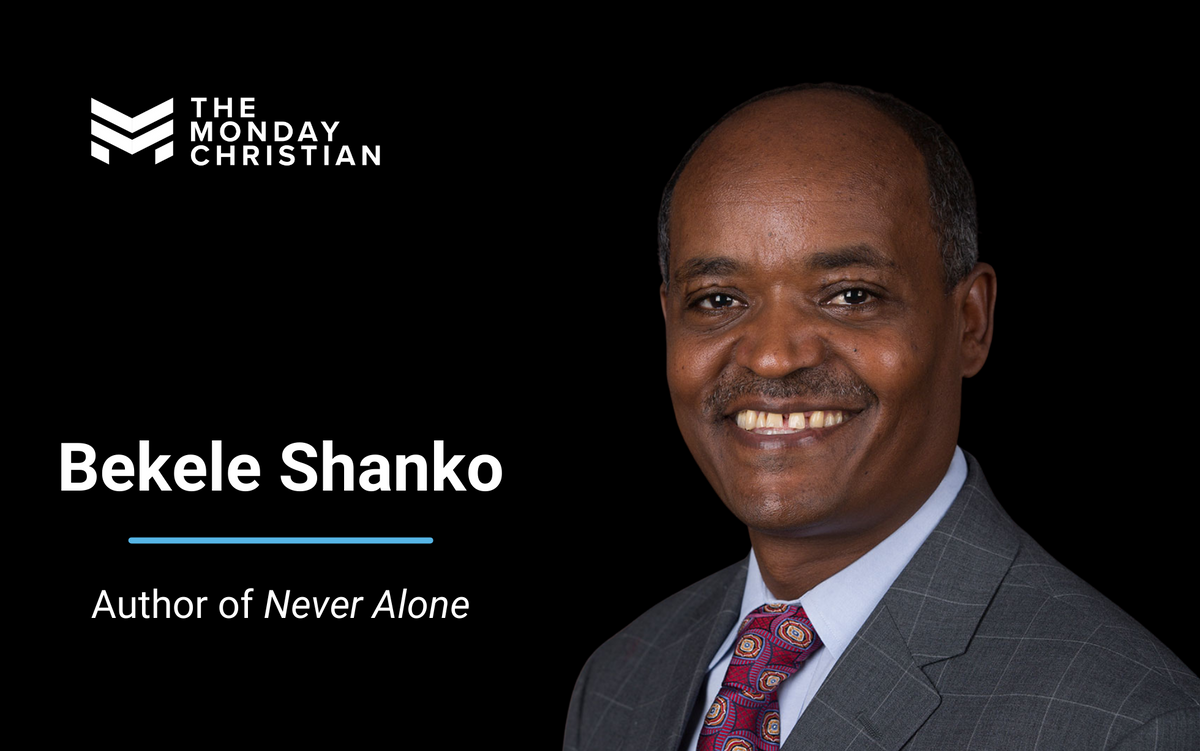
One of the most fascinating podcast conversations I’ve ever had was with the head of the Ethiopian branch of Campus Crusade for Christ (CRU), Bekele Shanko. In fact, it wasn’t much of a conversation because most of the time, I found myself gob-smacked by his story and spent most of our exchange listening.
Bekele grew up in a small rural village in south-central Ethiopia. There was no water, electricity, running water, church, or other Christians around. To fill this void, people in the community worshiped anything they could find. Animism was common, and people worshipped all sorts of objects, such as large trees, the moon, and the sun. Witchcraft was rampant, and Bekele’s dad worked for a prominent witch doctor.
In the heart of a polygamous culture, his dad had three wives who had a combined eighteen babies. Twelve of them died. As Bekele described, it was like growing up in a cursed family. If ever his father did not obey the commands of the witch doctor, one of his healthy children would suddenly die.
So certain were they in this curse that when Bekele was born, his parents didn’t bother giving him a name for the first few years of his life. In their minds, Ethiopian names held great meaning, so why name a baby when there was a good chance he would die? Finally, when he turned four, his parents decided on the name Bekele. The name means “he has grown” and speaks of a seed that germinates.
Thinking it odd that a child from this “cursed family” had survived, the witch doctor saw something in Bekele and asked if he could train him to become his servant—just as Bekele’s father had been. Bekele’s father agreed, and Bekele went into training. Reflecting on this season, Bekele said, “It was a hopeless life under spiritual darkness.”
This is where the story gets a bit crazy, and if you’re not one to believe in the supernatural, you’ll just assume Bekele is either nuts or a flat-out liar. Honestly, if it weren’t for the fact of my own supernatural experiences, I’d be inclined to dismiss his words as well.
❤️ Enjoy what you’re reading?
Consider supporting The Monday Christian. For a dollar a month, given as a simple one-time donation, you help keep this ministry free and growing for every reader.
Support TMCA Crazy Story
As Bekele shared, one night when he was five, God sent two angels to visit his father. These heavenly beings explained to Bekele’s father that God was the creator of all the heavens and the earth. And through a vision, Bekele’s father saw into heaven and hell.
Following this extraordinary experience, the angels asked Bekele’s father where he would like to go. Bekele’s father responded that he wanted to go to heaven. The angels smiled at his father and told him they would send two men who would tell him how to get to heaven.
Two days later, God appeared to two men from another village who were illiterate. And God told them to go and tell Bekele’s father that the only way he could get into heaven was if he believed Jesus Christ was the Son of God who died for the sins of humanity. That day was a turning point, and it was just the start of a series of miracles Bekele’s family experienced.
Bekele’s father had never been to school as it was never an option. In addition to his work for the witch doctor, his father was a farmer and tended to cattle. One day, while he was working with the cows along the river, he discovered a Bible laying on the ground. He had no idea where it had come from, but he picked it up and started thumbing through the pages. Suddenly, he heard a loud voice say, “This is my word.”
Something in his heart told him to go sit down underneath a tree and look at the book. And thee, Bekele’s father uttered these words, “God, was that your voice? Is this your book? If so, I cannot read it. Can you help me?” He then went on to make God a promise. “If you enable me to read this book, I will teach from it my whole life.”
To his amazement, as soon as he stated these words, he was able to read the text before him.
The Power of Partnership
Hurrying home, Bekele’s father called his entire village to his home. About four hundred men and women showed up in Bekele’s front yard. Rising to his feet, Bekele’s father stood up and shared all that had happened to him in the past few days. He invited people to read the Bible and deny demonic powers. And that night, the entire village came to faith in Christ.
Bekele’s dad would go on to be an evangelist for thirty-seven years. And during that time, the Bible was the only book he could read. When Bekele asked his dad why this was the only book he could read, his father responded that when he read the Bible, it was as if someone was shining a powerful torch over his head.
As Bekele grew, he sensed a call to ministry and sensed God wanted to do something special in Ethiopia. After earning a degree in statistics and mathematics at 19, Bekele was recruited by Ethiopia’s Federal Ministry of Health to serve as their chief information management officer for the National HIV/AIDS Control Program. This lasted for six years, and Bekele developed many partnerships with politicians and community leaders. But gradually, Bekele sensed God wanted something more from him and he joined the Great Commission Ministry in Ethiopia and became the national director at only age 26.
“As a statistician, I knew about numbers and probabilities,” Bekele shared, “And as a new staff member of our organization, I had been trained to share the gospel with people and form and lead discipleship groups. But I didn’t know how to lead an organization—how to recruit staff, build teams, raise funds, or develop and cast vision.”[1]
Making matters worse, the Great Commission Ministry had a mere $50 in its bank account. And despite his background in finances and passion for Christ, many doubted whether Bekele was the right man for the job. But in short order, Bekele worked hard to stabile this ministry and work with fellow leaders to develop a game plan to reach the 50 million inhabitants of Ethiopia. This plan included:
- dividing the country into 12 regions
- recruiting 300 full-time staff members
- mobilizing churches for the purpose of fulfilling the Great Commission
- raising funds from within and outside the country
- translating the “JESUS” film into 27 major languages spoken across Ethiopia
- acquiring 100 vehicles and two helicopters
- reaching people with the gospel in every village and town[2]
To the average person, Bekele’s plan was foolhardy, immature, and certain to fail. But this is when Bekele did something that would be pivotal to this mission’s success. For the next twelve months, every Tuesday for lunch, Bekele had his assistant schedule a meeting with one church community leader after another. At these lunches, Bekele had a clear agenda.
First, he wanted to know what God was doing through their ministry. Next, he asked permission to share what God was doing through the Great Commission Ministry. And finally, he asked each leader how they could partner together to make a difference in their nation. As a result, he was often invited to speak at their churches to share the vision God had given him for Ethiopia.
“Within four years of the initial vision-casting event,” Bekele notes, “we documented that we had shared the gospel with about 20 million Ethiopians, trained thousands of believers and helped plant hundreds of churches.”[3] Through Bekele’s ministry, millions in Ethiopia have come to believe in Christ. Today, Bekele’s Kambaata tribe has about 1.5 million people. And recently, Bekele’s friend did some research and found that 97% of this tribe are “born again believers.”[4]
From Bekele’s perspective, all of this can be attributed to partnerships. From an early age, he recognized that “partnership was not something abstract or extra but a means of survival and an integral part of life.”[5]
Speaking to the idea of partnerships, Bekele says, “A person who knows how to partner with others is like a miner who discovers a rich vein of gold.”[6] “Effective partnership strategies,” he goes on to write, “must be built around a common vision and mutual commitment, including:
- a commitment to work together regardless of denominational backgrounds and affiliations
- a willingness to share manpower, material, strategic and financial resources
- a desire to maintain pure motives and selflessness
- a willingness to seize opportunities for mutual growth and the furtherance of God’s kingdom”[7]
The story of Bekele and his father illustrates the way God often works in the hearts of his people. He starts with an individual, links them with others who share their passion, and empowers them to make a collective impact.
How eager are you to partner with others? What is holding you back from forging more partnerships? That's what we'll look at in tomorrow's devotional.
[1] Shanko, Bekele. Never Alone: From Ethiopian Villager to Global Leader (p. 61). BookBaby. Kindle Edition.
[2] Shanko, Bekele. Never Alone: From Ethiopian Villager to Global Leader (p. 63). BookBaby. Kindle Edition.
[3] Shanko, Bekele. Never Alone: From Ethiopian Villager to Global Leader (pp. 67-68). BookBaby. Kindle Edition.
[4] https://www.themondaychristian.com/tmcp-117-bekele-shanko-on-his-journey-from-serving-an-ethiopian-witch-doctor-to-becoming-a-global-leader/
[5] Shanko, Bekele. Never Alone: From Ethiopian Villager to Global Leader (p. 42). BookBaby. Kindle Edition.
[6] Shanko, Bekele. Never Alone: From Ethiopian Villager to Global Leader (p. 73). BookBaby. Kindle Edition.
[7] Shanko, Bekele. Never Alone: From Ethiopian Villager to Global Leader (pp. 141-142). BookBaby. Kindle Edition.