Be Still and Know
When life feels chaotic and out of our control, Psalm 46 reminds us that God is our refuge. Hezekiah’s crisis with Assyria offers historical context for this oft-quoted psalm.


The world has a way of shaking us to our foundations. Whether it is the macro-scale chaos of global politics and foreign wars, or the quiet, personal chaos of a failing relationship, a medical diagnosis, or a dwindling bank account—it can frequently feel like our lives are coming apart at the seams.
When the world pushes in, our natural human instinct is to build defenses. We map out strategies, burn the candle at both ends, and frantically try to manufacture our own security. We build walls.
In the fog of that frantic survival mode, Christians can throw around the words of Psalm 46:10: “Be still and know that I am God.” It’s a beautiful sentiment for a coffee mug, but do we actually understand the deep, historical soil this verse grew out of? Ripped from its roots, it sounds like an invitation to a quiet nap. Properly understood, it is an anchor for a soul in chaos.
A Malevolent Threat
Although the precise time of its writing is unknown, many scholars date Psalm 46 to around 701 BC, the year an amazing miracle of prophetic and divine intervention saved a people from certain destruction.
To understand the context of this chapter, a little history is required. In the 700s BC in the Middle East, there were many nations, each with its own kings and armies, but one empire stood head and shoulders above the rest. The ancient world lived in constant fear of the Assyrians. Leading up to 701 BC, the Neo-Assyrian Empire was the undisputed champion on the world stage. Brutal, effective, and ever-menacing, you did not want to get on the bad side of the king of Assyria.
Over the course of several campaigns, the Assyrians conquered nation after nation, including Aram, to the North of Jerusalem, as well as the northern kingdom of Israel. The empire had smashed through fortified city after fortified city, including the capital cities of Damascus (Aram) and Samaria (Israel). They had invaded the southern kingdom of Judah and besieged its major fortified cities, conquering them all (46 in total). The list of fallen cities includes Lachish, Judah’s strongest city and the second most important city in the small kingdom.
The Assyrians were literally undefeated. Every city they besieged eventually fell to the empire's inevitable ravages. Judah was in ruins. Only one strong city remained: the capital of Jerusalem, home to the royal palace and the Jewish Temple to their God. The Assyrians mocked the faith of God’s people. The conclusion seemed forgone. How could one small city withstand the full force of the most brutal and successful armies in history?
The Panicked Preparations
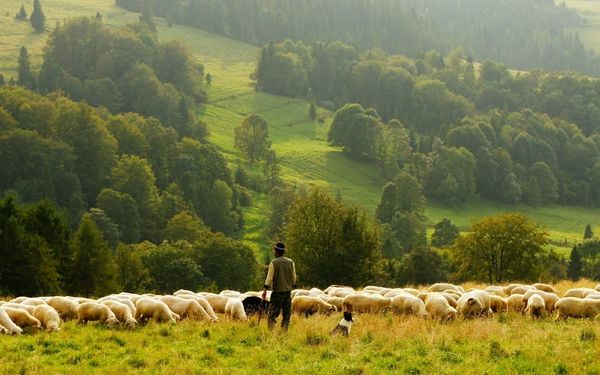
The prophet Micah gave a prophecy around this time saying: “I will surely gather all of you, Jacob; I will surely bring together the remnant of Israel. I will bring them together like sheep in a pen, like a flock in its pasture; the place will throng with people.” And so it came to pass that refugees from conquered Israel in the north and fallen cities of Judah flooded to Jerusalem for safety.
Hezekiah, the king of Judah and Jerusalem, fast-tracked an underground tunnel to bring water into the city, enabling those in Jerusalem to better withstand a siege. He also hastily constructed a wall around a huge, unprotected section of the city where refugees were flooding in, ripping down houses in the process in order to speed up construction.
We read the story of Hezekiah and the siege of Jerusalem in 2 Kings 18-19. Archaeologists discovered Hezekiah’s wall (sometimes referred to as the “broad wall” for its 23-foot thickness) in the 1970s. They even found the demolished foundations of many homes that were walled over in haste, just as the Bible says.
The people of Israel and Judah were flocking to their last hope of protection against the invaders and thus fulfilled Micah’s prophecy that the people of Jacob, from every tribe, would be gathered together in one place as a remnant, like sheep in the pen of Hezekiah’s Broad Wall.
The problem was that although Hezekiah was preparing for a siege, they had little hope of outlasting the tenacious Assyrian king, Sennacherib, or of coming out alive. In the past, King Hezekiah had relied on Egypt's power to save them, but that led to disaster. Now, the remnant of Israel was truly alone. A famous inscription found on an artifact known as Sennacherib’s Prism describes the situation from the Assyrian perspective, claiming Sennacherib had trapped Hezekiah inside Jerusalem “like a caged bird.”
Truly, the outlook was grim. After a short siege, surely the walls would be broken down, the people slaughtered in the streets, impaled, beheaded, and abused. Surely the promises of God would fail, and the people of God would be no more. But there was a glimmer of hope.
The Miracle of 701 BC
The prophet Isaiah, a contemporary of Hezekiah, rebuked the king for trusting in walls and reservoirs of water to save them rather than in the God who rules over history. Isaiah’s rebuke is found in Isaiah 22. At long last, Hezekiah repents before God and humbles himself. Isaiah then prophesies the downfall of Sennacherib and the Assyrians in Isaiah 37:32-35:
For out of Jerusalem will come a remnant, and out of Mount Zion a band of survivors. The zeal of the Lord Almighty will accomplish this. Therefore this is what the Lord says concerning the king of Assyria: “He will not enter this city or shoot an arrow here. He will not come before it with shield or build a siege ramp against it. By the way that he came he will return; he will not enter this city,” declares the Lord. “I will defend this city and save it, for my sake and for the sake of David my servant!”
What happened next is a miracle of astounding deliverance. According to 2 Kings 19:35 and Isaiah 37:36, an angel of the Lord went out and put to death one hundred and eighty-five thousand in the Assyrian camp! The next morning, the dead bodies were everywhere. Sennacherib picked up his army and returned to their own capital of Nineveh, leaving the same way they had come. God’s remnant was saved by His own power.
The power of the Assyrians was broken at their moment of triumph. The tales of their many victories were plastered on the walls of their palaces in true propagandist fashion. But regarding their sudden defeat at Jerusalem? The Assyrian records go dead silent.
The Power of Context
To those who don’t love history, I am sorry for the length of that review. It is important to understand the historical context of any Bible verse, but it is particularly valuable in this case. Now given the background, I want to return to Psalm 46 and quote it in full:
God is our refuge and strength, a very present help in trouble. Therefore we will not fear though the earth give way, though the mountains be moved into the heart of the sea, though its waters roar and foam, though the mountains tremble at its swelling. Selah.
There is a river whose streams make glad the city of God, the holy habitation of the Most High. God is in the midst of her; she shall not be moved; God will help her when morning dawns. The nations rage, the kingdoms totter; he utters his voice, the earth melts. The Lord of hosts is with us; the God of Jacob is our fortress. Selah.
Come, behold the works of the Lord, how he has brought desolations on the earth. He makes wars cease to the end of the earth; he breaks the bow and shatters the spear; He burns the chariots with fire. Be still, and know that I am God. I will be exalted among the nations, I will be exalted in the earth! The Lord of hosts is with us; the God of Jacob is our fortress. Selah.
Wow! “The nations rage, kingdoms totter…” Assyria has conquered Aram and Northern Israel. The geopolitical earth was shaking! “There is a river…” a nod to Hezekiah’s tunnel to bring water into the city to help survive the siege. The greater allusion is to the presence of God within the city of God, of which we are all citizens, that sustains and protects us. “Be still and know…”
After the panic of breaking down houses, building walls, and digging frantic tunnels, God commands human striving to cease. The physical walls and preparations did not save them. God, the Lord of Heaven’s armies, acting as the ultimate fortress, broke the Assyrian bows and shattered their spears.
“Caged Birds” or Free Birds?
Life throws a thousand things at us every day. It can be easy to lose sight of what’s important and get caught up trying to secure every loose end. Just as Hezekiah did, we can so easily get swept up in trying to manufacture security through human effort. We revert to anxiety-driven self-reliance when our world shakes.
We can feel like Sennacherib’s “caged birds,” surrounded on all sides, with no clear solutions. It is easy to forget that our hope is not in human effort but in Almighty God, who can carry us through the darkest shadows. Just because we’re surrounded by trouble doesn’t mean we’re abandoned by God. He is there, and He is working.
We are called to be free in Christ and soar on wings like eagles. That is the real meaning of the words, “be still and know that I am God.” We are not all-powerful and all-knowing. We can’t perfectly arrange the details of our reality to ensure everything goes as planned. God is on the throne, not me. The term “be still” means to slacken, to drop your weapons, to cease from striving, and to let go.
My encouragement is to release control to God. Relinquish your anxieties and your need to control things in your own power. It is God who saves, and in Him we find our rest.