The House That Death Could Not Keep

Growing up, one of my favorite stories was about how my parents came to faith in Christ. My mom was raised in a Christian family and attended church every week, while my dad was born into a Hindu-Christian family and primarily followed Hindu practices.
In 1983, the year my parents got married, a civil war erupted in Sri Lanka between the Tamil Tigers (LTTE), a separatist group, and the Sinhalese government. My parents, who are of Tamil descent, were renting a large house from my uncle in Jaffna, Sri Lanka, a central location for the conflict.
While there were moments where the impacts of war surrounded them, life went on as normal. My older sister was born in 1984, and they lived peacefully in their home with an elderly couple. My mom stopped attending church and, for 3.5 years, joined my dad in visiting the temple weekly.
In April 1987, two weeks after members of the LTTE hid at my parents’ house for a night, my dad was about to leave for work and saw an aircraft hovering above their house just as it dropped a bomb onto the corner of their house.
Without time to run and hide in a bunker, my dad grabbed my sister from the front yard and guided my mom and an elderly couple into the center room of the house, where they kept all the statues of the Hindu gods. As they ran into the room, the aircraft continued to deploy bombs onto the house one by one with 5-10 minute intervals. My dad recalls my two-year-old sister crying for thirst, and the only thing he could give her was the sweat from his brow.
After lying there trembling for an hour, the twelfth bomb had dropped. My mom suddenly screamed out, “JESUS!” before blacking out. Silence followed, punctuated only by the sound of the aircraft flying away. My parents lay frozen for another hour until neighbors rushed to collect what they thought were my family’s bodies—only to be surprised to find my family unharmed.
The Aftermath
Several hours after the bombings, my parents learned through a Sinhalese government officer connected to my uncle that the pilot had said, “After the twelfth bomb, I’m going to drop a few more to flatten the center of the house and anyone inside.”
Additional information revealed that at the exact moment that my mom called on Jesus’ name, the pilot immediately reported a "bright light covering the entire house," which rendered him unable to see it. Since he could not see the house, he withdrew without dropping the final bombs. This experience led my parents to recognize the power of Jesus’ name and to slowly begin building their faith in Him.
In May 1988, my parents immigrated to Bangkok, Thailand, as refugees. During their stay, a local church supported them by providing food, clothing, and community resources. They began attending church weekly but also visited the Hindu temple regularly.
Three years later, the Bangkok church connected them with a church in Toronto, Canada, that sponsored them. They officially moved to Canada in September 1991, where they started attending a local Tamil church. My mom remembers how my dad would pray to the Hindu gods before heading to church.
On Palm Sunday in 1992, after church, my dad returned home and immediately removed all the images and statues of Hindu gods, throwing them into the trash. He then took the palm-leaf woven cross he had brought home and nailed it to the wall. From that day forward, my dad and mom underwent a complete transformation. They devoted themselves fully to Christ and lived their lives in pursuit and honor of Him.
Life-bearing Ruins
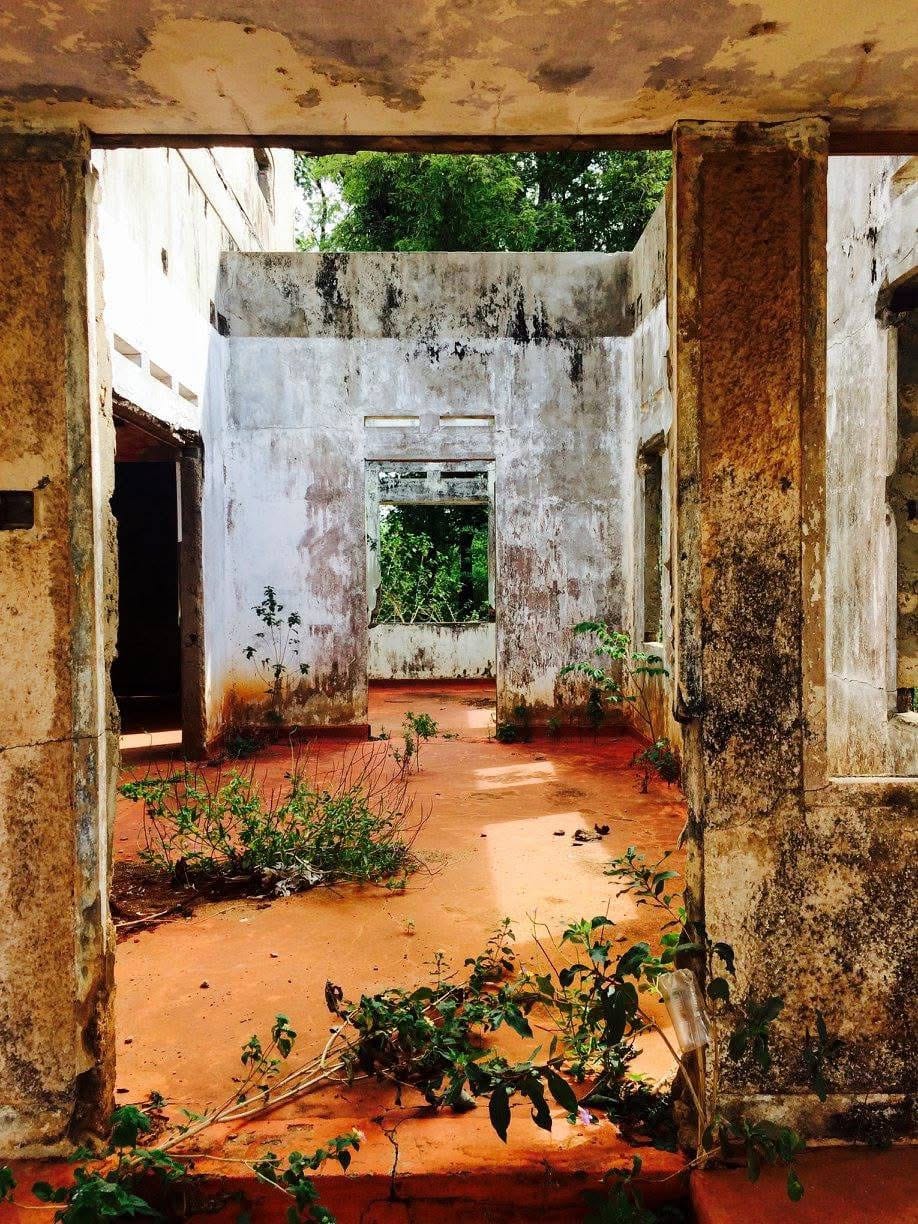
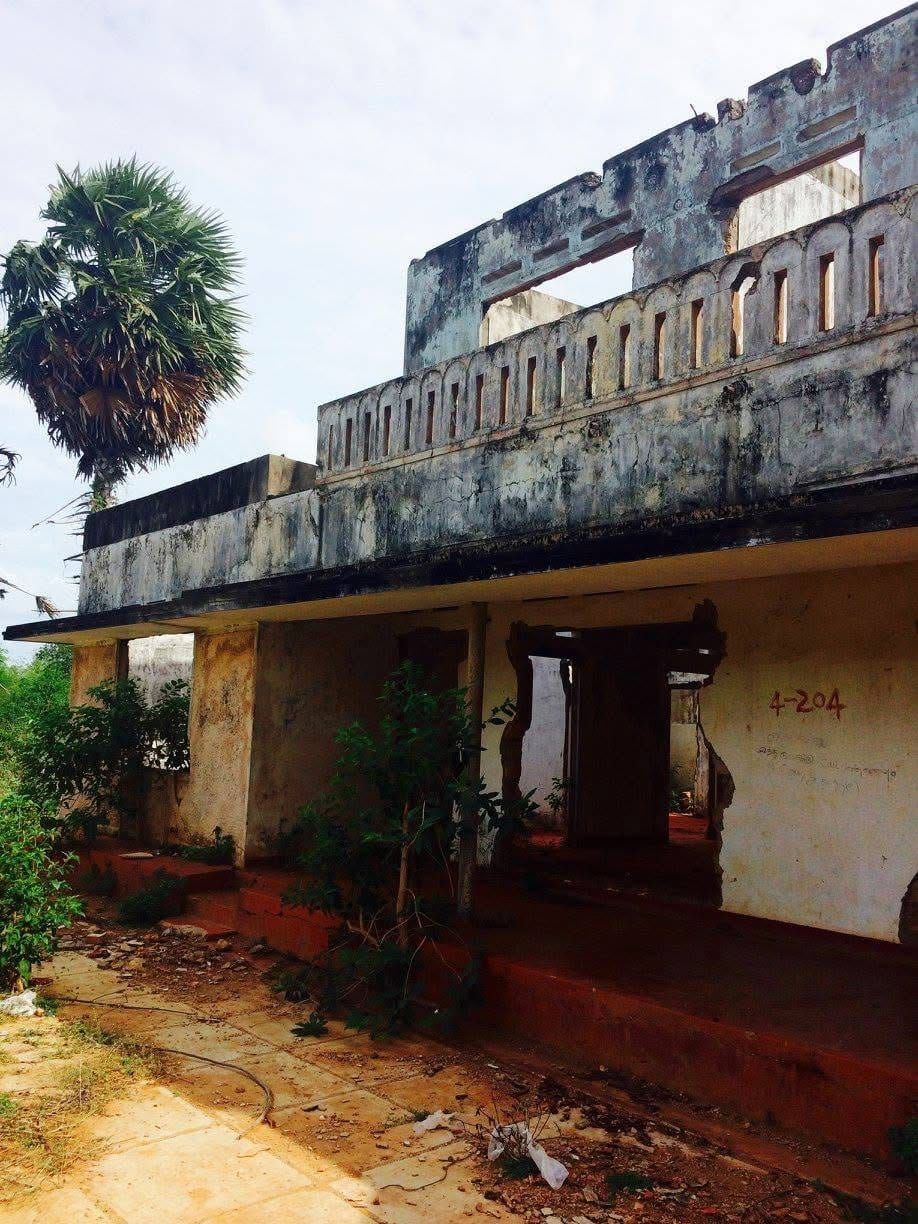
My family and I visited Sri Lanka in 2017 and went to see the house where they had lived. Standing on the grounds where my family narrowly escaped tragedy, I was overwhelmed by a mix of emotions as I saw the condition of the house.
I was surprised to find the foundation and walls still standing, while the rest of the house lay in ruins. The roofs were caved in, and the house was cluttered with debris and vandalism. The testimony that blossomed from this house had been beautified in my mind because of the symbol of hope and power that it held; it pained me to see the brutality of its true condition.
This home represented my parents’ life in many ways. They weathered through immense pain, trauma, and trials, but the foundation on whom they rested, which was Christ, was always firm and unshaken. At every point in their lives, through seasons of joy and suffering, my parents have always turned to and called on Jesus—a name they knew, from lived experience, could save. They never lost hope because they knew that true salvation rested in Him.
When I looked at the condition of my parents’ home, it reminded me of the cross in some ways. The reality of the cross is one that spells death and suffering. To an outsider, it was clear that death was at the doorstep of this house. It was marked with the wounds of war, bearing all the signs of loss and ruin. Yet, like the cross, its story was not one of defeat. The rooms stood empty not because death had won, but because life had carried on beyond its walls.
What once seemed like a monument to suffering became a testimony of survival—a reminder that death does not have the final word. The emptiness of this house, the empty cross, and the empty tomb are all evidence that there is power in the name of Jesus.
There are times in my life when suffering has felt like proof of God’s abandonment, or that hope has been lost. Yet, the cross serves as my reminder that God is authoring a greater story. In Him, fear and pain don’t have the final word. The resurrection does.
I hope my parents’ testimony can serve as a reminder that, regardless of the season of grief and hardship we face, we can trust that God is always at work, always on time, and that in Him, there is abundant life.