How Do I Make Meaningful Progress as a Christian?
Don’t buy into the myth that you can’t change. You can. And the beautiful news is that God’s work in you is ongoing.

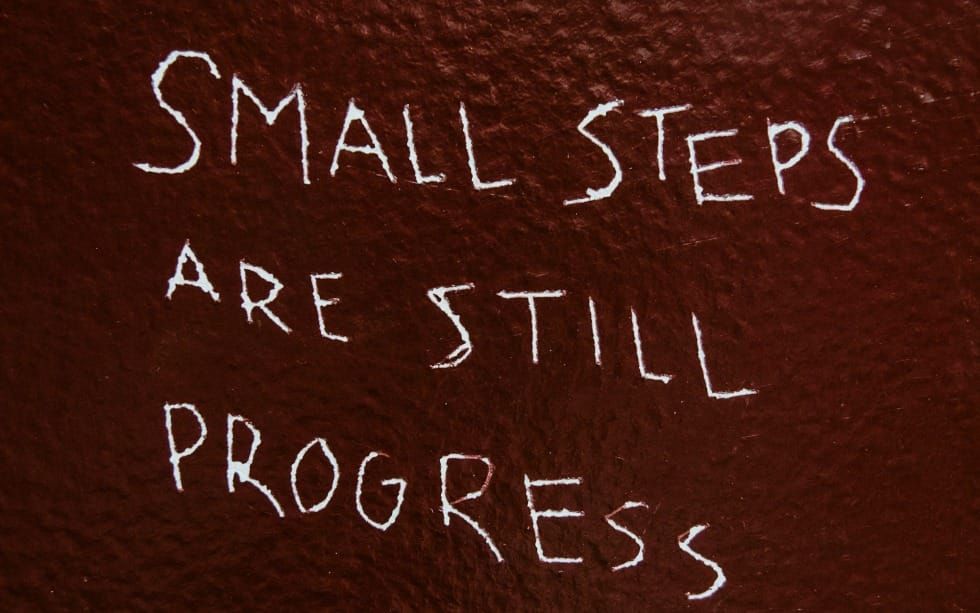
Have you ever met a person who has worked thirty years in an industry performing the same basic tasks they always have? They’ve worked for three decades, but they don’t have three decades of experience. They’ve had one year of experience, which they’ve replicated thirty times.
This is kind of like me with guitar playing. I’ve “played” the guitar for ten years, but I’m not much better than when I started. I keep saying I'll get serious...one day...
Some Christians take this same approach to spiritual formation. They’ve been Christians for a long time, but not much has changed. They still get angry when their coworkers don’t perform, yell at their kids, and spend way too much time worrying about things they can’t control.
Maybe this is your story. You want to make progress, but the whole "becoming more like Christ" thing feels overwhelming or just plain old tiring. So you settle, thinking to yourself, one day I will take this more seriously.
Thankfully, 2025 can be your year of breakthrough. What's the secret?
❤️ Enjoy what you’re reading?
Consider supporting The Monday Christian. For a dollar a month, given as a simple one-time donation, you help keep this ministry free and growing for every reader.
Support TMCTo Embrace the Process of Continuous Improvement
W. Edwards Deming, often hailed as the “Father of Continuous Improvement,” was an American statistician, professor, and management consultant whose ideas revolutionized industries worldwide. He is best known for his profound influence on quality management and his emphasis on process improvement as the cornerstone of organizational success.

Deming’s work gained significant recognition in post-war Japan, where his principles helped rebuild the country's manufacturing sector and significantly impacted Japan's economic rise. One of Deming's most notable accomplishments was the development of the Deming Cycle (Plan-Do-Check-Act), a systematic approach to problem-solving and continuous improvement.
At its core, Deming’s main idea was very simple. Evaluate current processes in place and make micro improvements that resulted in major long-term savings. Don’t blow your entire business structure up overnight (unless it needs to be). Instead, make small improvements. Get 1% more efficient.
This is a concept every Christian should embrace. However, some find it very difficult to do so. For example, if you’ve grown up in a tradition that had a lot of guilt and shame language, you might be unintentionally wired to make hard restarts that stunt your spiritual growth. Let me explain.
Let’s say you were trained that whenever a pastor spoke on topics like sin and hell, your knee-jerk response was to assume you were guilty. Maybe you went forward to pray at an altar, broke down in tears, or you left church feeling this heavy weight on your shoulders.
To release yourself from this burden, you began confessing and repenting of stuff you weren’t even guilty of. Your heart was in the right place (sort of). You wanted a fresh start, and you wanted those feelings of closeness to God you once experienced. But you felt the only way to find this peace was to convict yourself of crimes you didn’t commit.
So, instead of becoming a bit more like Christ, you blew everything up and started over. You assumed God's silence was evidence of his dissatisfaction. Instead of making progress, you took two steps back to take one step forward.
Does that sound familiar? If so, there is hope.
So, How Do I Focus on Continuous Improvement?
A few thoughts.
First, normalize honest feedback. Reach out to one or two Christian friends you trust and give them permission to speak truth into your life. Ask them to give you one area where you can improve. Not ten because you don’t want to feel like a loser. Just one. Maybe they point out you're too quick to doubt God, too quick to cuss, too quick to worry, or too quick to get distracted.
Second, thank them for their encouragement. Take your friends’ feedback seriously, but don’t take it personally. Remember the words of Proverbs 9:8 that a wise man loves rebuke. Don’t feel discouraged that you have room to grow. Instead, be thankful you have wonderful friends in your life who want to see you become more like Christ.
Third, establish a new habit. Again, we’re still in New Year’s Resolution mode, so I know it’s easy to think big. But think of small changes over time. One I’m working on right now is incorporating scripture into my daily conversations with kids. It's nothing major, but when they’re faced with a problem, instead of giving my opinion, I want to point them to God’s Word.
I doubt he was the first, but Bill Gates said, “Most people overestimate what they can do in one year and underestimate what they can do in ten years.” This is true of spiritual formation—it takes time!
Don’t buy into the myth that you can’t change. You can. And the beautiful news is that God’s work in you is ongoing.
Philippians 1:6 says, “I am sure of this, that he who started a good work in you will carry it on to completion until the day of Christ Jesus.” And 2 Corinthians 3:18 says, “We all, with unveiled faces, are looking as in a mirror at the glory of the Lord and are being transformed into the same image from glory to glory.”
In How to Grow, my friend Darryl Dash writes, “Spiritual maturity isn’t about white-knuckling it to sainthood. It’s about becoming a person who is fully alive. It means enjoying God and life in deeper and more abundant ways even in the middle of difficulty.”[1]
Sunday Christians are all about the big goosebumps moments. They’re addicted to big personalities, epic moments, and grand experiences. Monday Christians aren’t necessarily opposed to these, but they’re much more focused on becoming a bit more like Christ in the small, seemingly insignificant moments of life.
Be a Monday Christian.
[1] Darryl Dash, How to Grow: Applying the Gospel to All of Your Life (Chicago: Moody Publishers, 2018), 54.