Great Relationships Don't Just Happen
It’s easy to let relationships slide. One day, we’ll be a better parent or friend. One day, we’ll figure out the whole God thing. One day, we’ll give to those in need. One day, we’ll mentor others. One day...


Great relationships are forged through the fires of adversity, joys of pleasure, and the consistent mundane. Each of these three realities reveals the strengths and weaknesses of a relationship that might exist. Adversity tests endurance, joy shows connection, and the consistent mundane demonstrates character.
A relationship solely structured on hardship or joy might falter when the central cause of that relationship is removed. Relationships built around a sport, hobby, or medical crisis are often seasonal. And relationships established on the basics of life might snap under the weight of hardship or extended seasons of pleasure.
Great relationships have a healthy dose of adversity, joy, and the mundane. This is why few relationships are as strong as those forged between two lovers. People who know us when we are at our best, at our worst, and just our average selves. Those who know us well do not believe the hype when others puff us up, but they’ve got our backs when people kick us to the curb.
In the words of Mark Batterson, “Success is living life with such authentic integrity that those who know me best actually respect me most.”[1]
For the Christian, the essence of hell is life without meaningful relationships. This is what it means to die a spiritual death. In Being as Communion, John Zizioulas offers this profound, albeit technical, statement.
“Death for a person means ceasing to love and to be loved, ceasing to be unique and unrepeatable, whereas life for the person means the survival of the uniqueness of its hypostasis, which is affirmed and maintained by love.”[2]
When we cease to have meaningful relationships in our lives, a sort of internal death occurs. Like the body deprived of water and food, the soul deprived of meaningful relationships will cease to exist.
So, what's the key to developing meaningful relationships?
❤️ Enjoy what you’re reading?
Consider supporting The Monday Christian. For a dollar a month, given as a simple one-time donation, you help keep this ministry free and growing for every reader.
Support TMCLess Talking and More Doing
Saying relationships are important is easy. Everyone does that. The test is whether we back this statement up with how we live.
As a dad to four young kids, my mind often drifts to the lyrics of Harry Chavin’s 1974 sobering classic, “Cats in the Cradle.” (I apologize if your mind automatically shifts to the many parodies that have resulted from this little melody!)
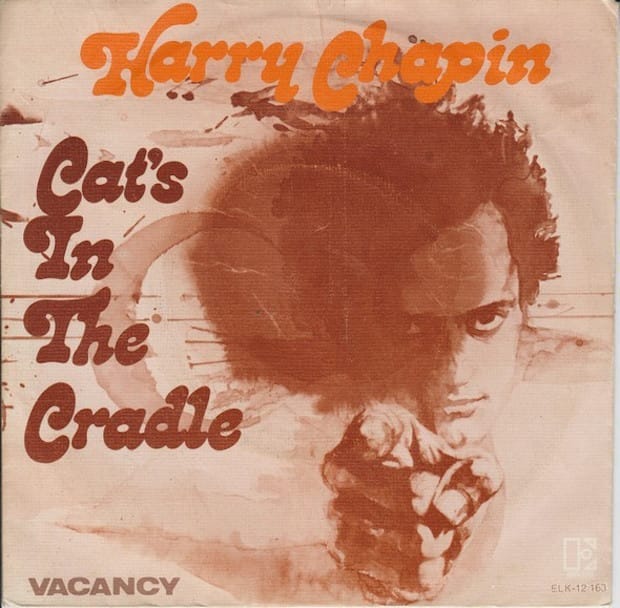
The part that always gets me is the slow progression. From the first couple of verses, it sounds like a normal father who just doesn’t have the time he’d like to spend with his young son. The last few verses sound like a normal older child who likes his dad but just can’t find the time to be with him. There is nothing malicious.
But then comes the unexpected punch. After phoning his busy son to ask if they can spend time together, his request is denied, leaving the man to reflect with these sobering words:
And as I hung up the phone, it occurred to me
He'd grown up just like me
My boy was just like me
For many, it’s not until years of neglect have passed that they realize what they have missed. Life was good. It was busy. There were things to do and dreams to accomplish. But then everything came crashing down. They had time to think about what really mattered and realized they had missed the mark.
It’s easy to let relationships slide. One day, we’ll be a better parent or friend. One day, we’ll figure out the whole God thing. One day, we’ll give to those in need. One day, we’ll mentor others. One day...
Ignoring the most important relationships in our lives is seldom an earth-shattering decision. Rather, it’s a series of micro-choices made over an extended period. It’s a missed soccer game here and a failure to call someone back there. Gradually, those small decisions compound to form a life filled with regret.
So, How Do I Make Relationships a Priority and Stop Living a Life of Regret?
The answer comes back to intention. Relationships are strengthened the same way they are neglected—through time and consistent behavior patterns.
Buying a spouse a new car doesn’t make up for two decades of neglect, and suddenly offering to hang out with friends doesn’t compensate for the dozens of nights we turned them down. Real relationships require conscious and intentional investment. Hebrews 10:24-25 says:
24 And let us consider one another in order to provoke love and good works, 25 not neglecting to gather together, as some are in the habit of doing, but encouraging each other, and all the more as you see the day approaching.
The best relationships are formed from a long-game approach and require us to think from a different perspective—the perspective of a breadcaster.
What is a breadcaster? That will be the focus of our series next week.
[1] https://www.markbatterson.com/variant-spellings/
[2] (Being as Communion, p.49)