
What If God Wants to Save You IN The Fire?
God has a way of taking our hardest situations and bringing about the greatest good.

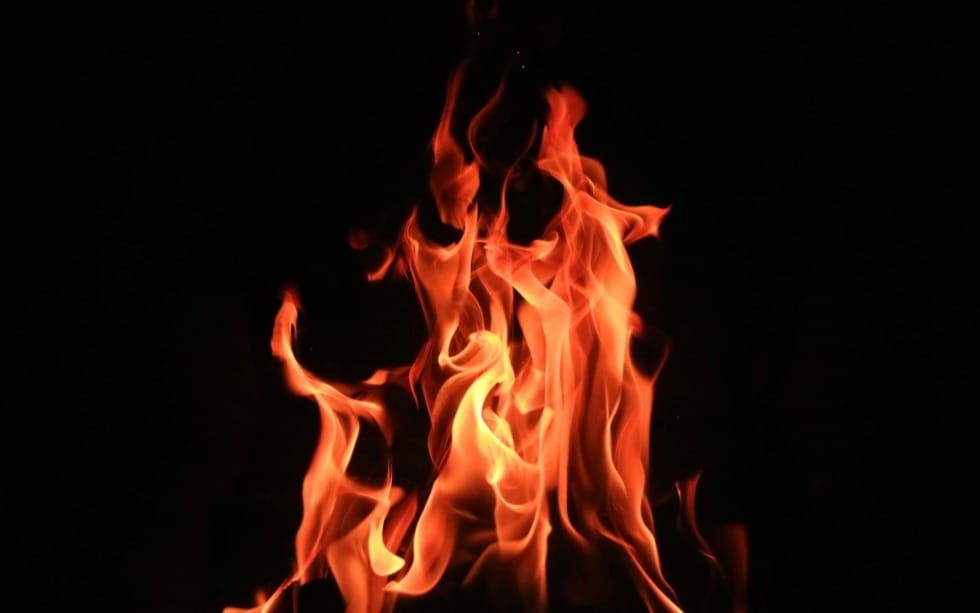
One of the great mysteries of the Christian life I've discovered is that the closer to God I get, the greater the trouble I encounter.
It's almost uncanny how, when I resolve to fast or pray more, unexpected problems inevitably arrive on my doorstep. A key client will cancel. My depression gets worse than it's ever been. Or an out-of-the-blue relational conflict emerges.
While the long-term blessings of this divine pursuit are good, as they provide wonderful moments of pruning and focus, the long-term blessing does not nullify the short-term pain.
When problems arise, I can't say I always respond as I should, but time and experience have brought some perspective. It's revealed my natural propensity to think 1 + 1 always equals 2. That as I pursue God, God will in turn keep me from trouble, and this will result in a life of ease.
In speaking with other Christians, I know I'm not alone in my observation. So what are we to make of this? Is God a sadist who enjoys the suffering of his people?
Far from it. God does not always shield us from the fire, but he is always with us in the flames. This was a reality Shadrach, Meshach, and Abednego discovered while in Babylonian exile.
❤️ Enjoy what you’re reading?
Consider supporting The Monday Christian. For a dollar a month, given as a simple one-time donation, you help keep this ministry free and growing for every reader.
Support TMCIn the Fire
Daniel 1-4 narrates the experiences of Daniel and his friends, and we see this series of ups and downs. First, Daniel and his friends are in crisis because they refuse to defile themselves with the king's food. But this choice results in receiving the king’s favor.
Then, Daniel's life is in jeopardy again when he interprets King Nebuchadnezzar's dream of a great statue, revealing the succession of empires and God's ultimate kingdom.
By the time we get to Chapter 3 and the famous fiery furnace narrative, we are not surprised to see a crisis emerge once again. Verse 1 says, “King Nebuchadnezzar made a gold statue, ninety feet high and nine feet wide. He set it up on the plain of Dura in the province of Babylon.” From there, a herald proclaims:
4 “People of every nation and language, you are commanded: 5 When you hear the sound of the horn, flute, zither, lyre, harp, drum, and every kind of music, you are to fall facedown and worship the gold statue that King Nebuchadnezzar has set up. 6 But whoever does not fall down and worship will immediately be thrown into a furnace of blazing fire.”
As John Goldingay notes, “This Nebuchadnezzar is one whom God allowed to devastate and pillage the temple in Jerusalem, which David had enriched with 100,000 talents of gold; he is one who has been characterized in chap. 2 as the gold head of a multi-metaled statue.”[1] Goldingay continues by saying, “Whatever the nature of the statue, it held religion and state together.”[2]
This is Nebuchadnezzar’s goal. He wants to intertwine his rulership with worship. It’s not enough for the people to obey his commands; he wants their praise. And for the followers of Yahweh, this is a bridge too far. They were willing to excel and become strong citizens in Nebuchadnezzar’s empire, but they were unwilling to bow their knees to a god made with human hands.
Because of their obedience to God, Nebuchadnezzar has them bound and thrown into a fiery furnace. But it’s here we get one of the most remarkable accounts in all of Scripture. Daniel 3:24-25 says,
24 “Then King Nebuchadnezzar jumped up in alarm. He said to his advisers, ‘Didn’t we throw three men, bound, into the fire?’ ‘Yes, of course, Your Majesty,’ they replied to the king. 25 He exclaimed, ‘Look! I see four men, not tied, walking around in the fire unharmed; and the fourth looks like a son of the gods.’”
It should be noted that “the OT often mentions the ‘sons of God,’ which is a reference to the divine council of heavenly beings, or angels.”[3] Goldingay notes, “The king who thought that no god could save the confessors from his power is the one who now perceives God’s intervention. The three have not been delivered from the fire, but they are delivered in the fire.”[4]
Fires Are Everywhere
“Delivered in the fire.” What a beautiful concept.
While the fires you face today might not compare with those Daniel's friends encountered in ancient Babylon, you will have your share of trouble. The rejection from a loved one, the loss of a job, or a health crisis you didn't see coming. When these fires merge, your natural impulse will be to pray, "God, remove this fire." And sometimes he does. But what do you do when the fire remains?
The easiest response is doubt, but it's here you must hold firm and lean not on how you feel about God in the moment, but on what you know to be true about God. To trust his plan of salvation, whatever this might look like.
God might not deliver you from your fire today, but I can tell you he will deliver you through it.
[1] John E. Goldingay, Daniel, vol. 30, Word Biblical Commentary (Dallas: Word, Incorporated, 1989), 72.
[2] Goldingay, Daniel, 73.
[3] William B. Nelson, Daniel, Understanding the Bible Commentary Series, Accordance electronic ed. (Grand Rapids: Baker Books, 2012), 115.
[4] Goldingay, Daniel, 74.