What Coincidences Taught Me about God's Providence (Ruth 2-3)
Ever felt like life is a series of random events? Ruth’s story shows that what feels like chance is often God at work behind the scenes.

Ruth 2-3
Today's Scripture Passage
A Few Thoughts to Consider
In Ruth 2, the narrative shifts from Naomi to her daughter-in-law, Ruth. Remember that in Chapter 1, after Naomi instructs her to return to Moab, she makes this commitment to Naomi:
16 Don’t plead with me to abandon you
or to return and not follow you.
For wherever you go, I will go,
and wherever you live, I will live;
your people will be my people,
and your God will be my God.
17 Where you die, I will die,
and there I will be buried.
May the Lord punish me,
and do so severely,
if anything but death separates you and me.
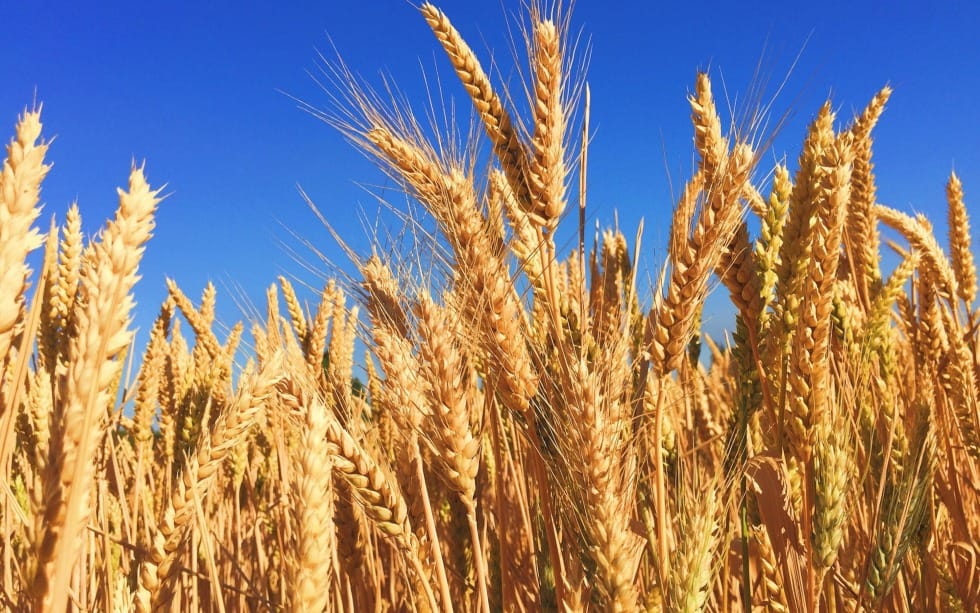
Now, Naomi and Ruth attempt to make a new life. It involves work. A lot of work. Arriving in Bethlehem at the start of the barley harvest indicates they arrived in late March or early April. As Daniel Block writes, “Since barley was the first crop to be harvested each year, the timing of their arrival meant that Naomi and Ruth could get settled at a time when food would be relatively plentiful and that they were around to lay up stores of each crop for the dry season.”[1]
Ruth asks Naomi for permission to go and “glean the fields” or gather fallen grain left behind by local crop owners. Keep in mind that in Leviticus 19:9-10, God had instructed Israelite farmers, 9 “When you reap the harvest of your land, you are not to reap to the very edge of your field or gather the gleanings of your harvest. 10 Do not strip your vineyard bare or gather its fallen grapes. Leave them for the poor and the resident alien; I am the Lord your God.”
This provided an invaluable lifeline for Ruth. But still, there are numerous strikes against her. These include her gender, marital status, and nationality. On top of this, by choosing to work in a random stranger’s field, she risks the real possibility of being abused or raped by the men in charge.
Ruth politely asks Naomi if she can glean, and Naomi consents. According to Ruth 2:3, Ruth “chanced her chance to come upon”[2] the field of Boaz—a wealthy landowner from Bethlehem and a relative of Naomi's deceased husband, Elimelech. As Fredric W. Bush writes, “In our context the idiom does not express the modern idea of ‘chance’ or ‘luck,’ for that is foreign to OT thought. Rather, it signifies that Ruth, without any intention to do so, ended up gleaning in the field that belonged to Boaz.”[3]
Not only that, but she gains favor in his eyes. Verses 8-9 say,8 “Then Boaz said to Ruth, ‘Listen, my daughter. Don’t go and gather grain in another field, and don’t leave this one, but stay here close to my female servants. 9 See which field they are harvesting, and follow them. Haven’t I ordered the young men not to touch you? When you are thirsty, go and drink from the jars the young men have filled.’”
It’s only after Ruth returns home with more food than she imagined that she and Naomi put everything together. Despite their pain and years of hardship, Yahweh is still faithful. To Ruth and Boaz, this was a “chance” encounter. But not to God. Because with God, there is no such thing.
A Meditation to PRAY
Praise | I’m amazed at your provision and grace, as shown in the story of Ruth. Your way of weaving individual human lives into your grand tapestry of history astounds me. I praise you for being a God who cares about every detail of my life.
Release | I release to you my worries and doubts about the future. You will guide and provide for me, just like you did with Naomi and Ruth. Help me to let go of my need to control every outcome and to trust in you.
Ask | I ask for the courage to step out in faith as Ruth did, leaving behind what is comfortable to embrace what you call me to. Give me the wisdom to recognize those you have placed on my path to offer guidance and protection. Teach me to be a blessing to others, even as I seek your blessings.
Yield | I yield to your will, knowing that you work through my circumstances and relationships to fulfill your purpose. Help me remain open and attentive to your leading, ready to act with kindness and courage. In the quietness of my heart, I will listen for your gentle whisper, guiding me step by step.
A Challenge to Act Like Christ
Sometimes, our lives feel random and as though we have all these fragments that don’t fit together. We’ve moved, experienced a divorce, or changed careers, and it’s hard to see how one part of life fits into the rest. And sometimes, we’ll never know. But in these moments, we can thank God that he is a God of redemption, and nothing is wasted. This offers tremendous hope.
Perhaps you’ve had your share of “wasted years” and feel some parts of your life will never be redeemed. If this is where you’re at, it’s time we personalize the effects of redemption in your life. Flannery O’Connor wrote, “Redemption is meaningless unless there is a cause for it in the actual life we live.”[4]
Redemption isn’t just a neat theological word. It is the answer to all the pain and emptiness you experience. If you feel empty today, take out a sheet of paper and write down those primary pain points you’re experiencing. Then, link them to redemption. Make redemption a personal experience.
Because of Christ’s redemptive work on the cross, you have the assurance that he really is working all things for our good and his glory—even those “chance” encounters.
[1]Daniel I. Block, Judges, Ruth, ed. E. Ray Clendenen and Kenneth A. Mathews, vol. 6 of The New American Commentary. Accordance electronic ed. (Nashville: Broadman & Holman Publishers, 1999), 650.
[2]George M. Schwab, “Ruth,” in Numbers-Ruth, vol. 2 of The Expositor’s Bible Commentary Revised Edition. ed. Tremper Longman III and David E. Garland; Accordance electronic ed. (Grand Rapids: Zondervan, 2012), 1321.
[3] Fredric W. Bush, Ruth, Esther, vol. 9, Word Biblical Commentary (Dallas: Word, Incorporated, 1996), 104.
[4] Flannery O’Connor, “The Fiction Writer and His Country,” (Library of America, 1988), 804– 805.