The Power of Trusting God Like Abraham
Uncertainty and difficulties are a part of life, but like Abraham, we can place our trust in God, who is perfectly faithful and trustworthy.

“Without faith it is impossible to please God." These are the unqualified words of Hebrews 11:6. Faith is also the channel through which we receive salvation: "For by grace you have been saved through faith” (Ephesians 2:8). And there's more: righteousness comes through faith (Romans 3:22), justification is through faith (Romans 5:1), sonship is through faith (Galatians 3:26), and confident access to God is through faith (Ephesians 3:12).
Since biblical faith is so foundational to every aspect of the Christian life, we would do well to understand what it truly is. I was surprised to discover that the dictionary is one of the least helpful places to go.
What Faith Is (and Isn't)
Search "define faith" online, and you’ll find something like this: "strong belief in the doctrines of a religion, based on spiritual conviction rather than proof." This definition is actually the opposite of biblical faith. Biblical faith is not belief without evidence—it is confidence in the God who has proven Himself trustworthy.
A better definition is simpler: "complete trust or confidence in someone or something." Biblical faith is not blind faith or a special spiritual technique; it is trusting the character of God. God has shown Himself to be trustworthy. His Word is trustworthy—attested by history, internal consistency, and fulfilled prophecy—and He has also proven to be practically faithful to those who trust in Him.
Abraham is Scripture’s premier example of this kind of faith. He was given such titles as "the friend of God" and "faithful Abraham," not because he fully understood everything, but because he genuinely trusted God’s character.
Biblical faith is not belief without evidence—it is confidence in the God who has proven Himself trustworthy.
Abraham’s Faith and Ours
In Galatians 3:6-9, Paul sets up Abraham as an example of godly faith: "Abraham believed God, and it was reckoned to him as righteousness." This comes from Genesis 15:6 when God promised Abraham a son.
The promise seemed impossible since Abraham and Sarah were beyond childbearing years. Abraham believed God, but his wife, Sarah, responded a little differently. She laughed! Yet God was faithful, and against all human expectation, Isaac was born. God saw Abraham's trust, and Abraham would soon see just how much he trusted God.
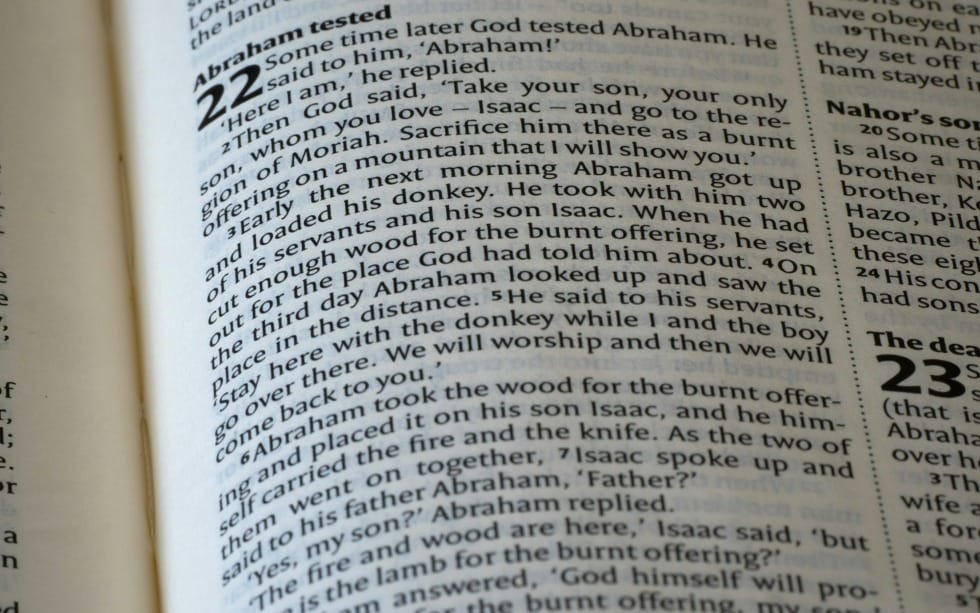
Genesis 22 describes what is possibly the greatest test of faith recorded in Scripture, and it illustrates what real faith is. God commands Abraham to take Isaac, his only son, the son that he loves, and offer him as a burnt offering. This command is shocking, as it also must have been to Abraham. But he obeyed. At the last instant, God prevented Abraham from killing his son.
But why would God command such a terrible thing, and why did Abraham obey? The answer to the first question is that God wanted to test Abraham’s faith. The answer to the second is more revealing and shows just how much faith Abraham had in God's goodness and faithfulness.
Abraham was trusting God’s promise concerning Isaac: "But My covenant I will establish with Isaac" (Genesis 17:21). Abraham took it as certain that whatever happened to Isaac on that mountain, God's promise would stand. Hebrews 11:19 gives insight into Abraham’s mind, that he "considered that God is able to raise people even from the dead."
This is incredible faith! The first recorded resurrection of Scripture would not be for another several hundred years. But Abraham was so entirely confident in God's goodness and faithfulness that he assumed God would raise Isaac from the dead if it came to it.
As Abraham prepared to ascend Mount Moriah, fire and knife in hand, he told the young men in his company, “We will worship and return to you.” Abraham didn’t know how God would intervene in the situation, but he trusted that He would. Much like a little child trusts a parent, Abraham trusted the God who had repeatedly proven Himself trustworthy.
Modern Day Faith
The same kind of faith still works today because God hasn’t changed. T. Earnest Wilson, a missionary to Angola in the early 1900s, followed George Müller’s example and resolved never to make known any financial need, trusting in God to provide.
Right before his departure in 1923, a friend gave him two gold sovereigns, saying, "If you are ever down to your last penny, there is something to fall back on." Seventy years later, after loss, hardship, and privation, Wilson still had those coins. God had been faithful.
A Challenge For Us
Abraham was faithful in an extraordinary circumstance, but his life was also characterized by daily trust. This is the pattern of Scripture: "He who is faithful in a very little thing is faithful also in much" (Luke 16:10). By choosing to trust God in little things, we can build a life of faith.
Are we worried about provision? Jesus reminds us, "Your heavenly Father knows that you need all these things." He then calls us to "seek first His kingdom and His righteousness, and all these things will be added to you" (Mathew 6:32-33).
So this week, let’s refuse anxiety and trust God instead. Let’s obey even when life is difficult and uncertain. The world and our lives are full of uncertainty, but we can have faith in the One who knows the end from the beginning.
Like Abraham, we won’t understand everything, but one thing we can know is that God has shown Himself trustworthy. Let’s trust Him in faith, and in so doing, enjoy the promise of Galatians 3:9: "So then those who are of faith are blessed with Abraham, the believer."