Relationships Aren't Just a Means to an End. They ARE the End.
“The good life is built with good relationships.” - Robert Waldinger

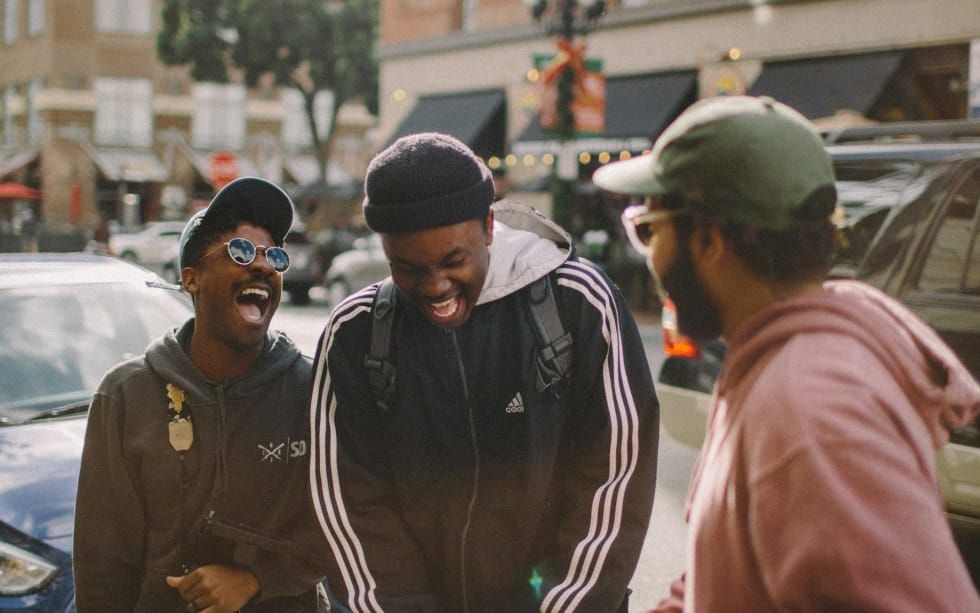
Everything in life starts and ends with relationships.
Your days are full of complex challenges and questions. Where should I go to university? How much should I pay for a new car? Should I buy a new home? But if we were to untangle nearly every choice, I'm convinced we would find a relational component attached.
Going back to our example of only having three years to live, what priorities would govern how you spend your remaining time on earth? My guess is that if you were to take out your own notecard and jot down a list of 5-10 things that were most important (as I challenged you to do yesterday), you'd find relationships are the common denominator.
I make this wager because when we’re forced to think it through, most of us recognize relationships are all that matter in this temporary world. We know that. The problem is we often don’t live as though we know that.
Why is this the case?
❤️ Enjoy what you’re reading?
Consider supporting The Monday Christian. For a dollar a month, given as a simple one-time donation, you help keep this ministry free and growing for every reader.
Support TMCMaybe It’s Because We Haven't Linked the Importance of Relationships With Living a Good Life
In 2016, American psychiatrist Robert Waldinger posed a thought-provoking concept to his TED Talk audience. Standing before a packed auditorium, Waldinger challenged his listeners with this question: “If you were going to invest in your future best self, where would you put your time and your energy?”
After noting a survey that indicated 80% of millennials wanted to be rich while another 50% wanted to be famous, Waldinger shared the history of The Harvard Study of Adult Development that began in 1938 and continues to this day. In the late thirties, researchers from Harvard began researching 724 teenagers from two groups of people.
The first were sophomores at Harvard College, with many going on to serve in World War II. The second group selected came from poor neighborhoods in the Boston community. Many of these teenagers did not have access to basic amenities such as hot water. While most studies of this kind only lasted a few years, this study remained and is arguably the longest study of adult life ever attempted.
The goal of this research was to study these two groups of young men by investigating their families, health, and occupations to see which ones developed well and which ones struggled. One by one, these teenagers were interviewed along with their parents. In the years that followed, these men grew up to be factory workers, lawyers, bricklayers, doctors, and even one US President—John F. Kennedy.
Some participants developed alcoholism, while others had schizophrenia. Some started out poor and became rich. Others showed great promise but wound up descending the social ladder. For the next several decades, researchers interviewed these participants every two years. While some of them died at a young age, many lived into their eighties.
As someone who became chair of this study in 2010, Waldinger analyzed the vast amount of data this study had accumulated over the decades and found the facts pointed to one clear message: “Good relationships keep us happier and healthier. Period.”[1] Furthering this concept, his findings revealed three major points about relationships.
- First, he discovered social connections are imperative, whereas loneliness quite literally kills.
- Second, Waldinger’s team recognized it was the quality, not the quantity, of relationships that mattered most.
- The third critical takeaway this study highlighted was that good relationships don’t just protect bodies. They protect the brain.
Those who did not have good relationships experienced earlier cognitive decline, while those with strong connections had better control of their mental faculties.
This series of revelations left Waldinger to make this profound observation: “The good life is built with good relationships.”
So, How Should Relationships Change the Way I Build My Life?
Jesus said it best in Matthew 22:37-40 when he said to his disciples, 37 “Love the Lord your God with all your heart, with all your soul, and with all your mind. 38 This is the greatest and most important command. 39 The second is like it: Love your neighbor as yourself. 40 All the Law and the Prophets depend on these two commands.”
His point was clear: the key to a successful life is to build a strong relationship with God and strong relationships with others. And from there, you can figure out how to organize your life.
The great British theologian Lesslie Newbigin wrote, “Human beings find fulfillment not in the attempt to develop themselves, not in the effort to better their own condition, not in the untrammeled exercise of unlimited covetousness, but in the experience of mutual relatedness and responsibility in serving a shared goal.”[2]
As a British citizen who lived through both world wars, Newbigin goes on to note that many London residents who experienced the bombings of World War II considered these years some of the best of their lives. The human suffering was terrible, but the bonds developed through that suffering remained.
“The bombing of cities, the destruction of homes, the absence of rest or holiday, the shortage of food and clothing, and the constant presence of death were all part of the picture,” Newbigin soberly stated, “but what colors it all is the memory of shared commitment to a common purpose. That is what brings human beings to their very best.”[3]
This is not to diminish the horror of human suffering, but it tells us how humanity finds meaning. A quick scan through our personal existence would likely reveal that the greatest moments of our lives were those spent in meaningful relationships with others. An afternoon building sandcastles with our children had significance because it was done in connection to people we loved.
Relationships are not just a means to an end. Relationships are the end.
How do I make relationships "the end"? That's what we'll look at tomorrow.
[1] https://www.youtube.com/watch?v=8KkKuTCFvzI&ab_channel=TED, 6:21
[2] Newbigin, Lesslie. Foolishness to the Greeks: The Gospel and Western Culture. Wm. B. Eerdmans Publishing Co., 1988. Kindle edition. 122.
[3] Newbigin, Lesslie. Foolishness to the Greeks: The Gospel and Western Culture. Wm. B. Eerdmans Publishing Co., 1988. Kindle edition. 122.