
How Do You Judge Others? (Proverbs 17)
Do you judge others based on your own bias? Proverbs 17 calls us to reflect God’s justice, not our personal preferences.

Proverbs 17
Today's Scripture Passage
A Few Thoughts to Consider
Do you judge others?
Regardless of what we might say, we are constantly making certain judgments about others. Most people naturally see themselves as the primary point of balance and others as out of alignment. Friends are either too conservative or too liberal, too introverted or too extroverted, too kind or too harsh.
But Proverbs 17:15 says, “Acquitting the guilty and condemning the just—both are detestable to the Lord.” This statement is an admonition to judges. As Bruce Waltke writes, “The proverb corrects the popular misconception that it is better to set free ten guilty persons than to condemn one innocent person.”[1] God hates injustice in any form. As Keil and Delitzsch write, “Whoever pronounces sentence of justification on the guilty, appears as if he must be judged more mildly than he who condemns the guiltless, but both the one and the other alike are an abhorrence to God.”[2]
While we might not play the role of a local civil judge, this Proverb tells us something about God’s nature and how he wants us to treat others. For example, if we lean more conservative in our thinking, we’ll be inclined to give those who have a similar philosophy as us a pass. If we’re more socially liberal, we’ll naturally be more charitable toward those who share our viewpoints on certain topics that we’re passionate about.
This is natural. But this Proverbs helps us understand that we need to be careful in our judgments. Practically speaking, if we’re hiring someone for a job, will we hire someone who is best qualified or someone who thinks more like us? Do we give the benefit of the doubt to friends who say what we want to hear but dismiss those who don’t?
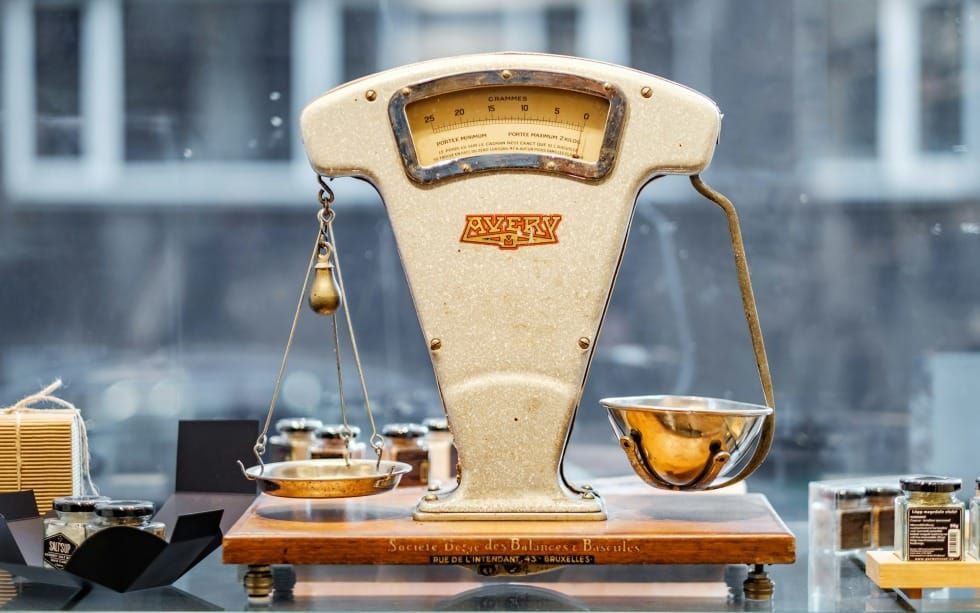
Judgments take many forms. But it’s critical to judge people from a position of balance and not bias.
❤️ Enjoy what you’re reading?
Consider supporting The Monday Christian. For a dollar a month, given as a simple one-time donation, you help keep this ministry free and growing for every reader.
Support TMCA Meditation to PRAY
Praise | Lord, I praise you for your unerring sense of justice and righteousness. You are eternally fair and just, never swayed by falsehood or deceit. Your ways are perfect, embodying the ultimate standard of truth and moral integrity.
Release | I consciously release my own misunderstandings and the judgments I cast upon others, acknowledging that they often fall short of your divine wisdom, and I seek help to relinquish my propensity to judge others harshly or to view them through the lens of my imperfections.
Ask | I humbly ask for the gift of discernment that allows me to see situations and the hearts of people through your eyes, and I pray for the wisdom and courage to support what is just and righteous and to stand firmly against what is wrong, aligning my actions with your divine will.
Yield | I wholeheartedly yield to your sovereign guidance and gentle correction, trusting that your paths lead to righteousness and truth. I am committed to upholding justice in all my dealings, trusting that you orchestrate all events for a greater good that sometimes surpasses my understanding.
A Challenge to Act Like Christ
Of course, we all bring certain biases to the table. As Anthony Casey notes, “The key is not to pretend you have no bias, but rather to identify your biases ahead of time.”[3] It’s having the self-awareness to realize you have certain likes and dislikes and people you tend to favor and tend to reject. Only after identifying these biases can you begin the process of properly judging others.
In Matthew 7:1-2, Jesus said, “1Do not judge, so that you won’t be judged. 2 For you will be judged by the same standard with which you judge others, and you will be measured by the same measure you use. As D.A. Carson clarifies, this verse does not “forbid all judging of any kind, for the moral distinctions drawn in the Sermon on the Mount require that decisive judgments be made.”[4] Instead, Jesus is teaching his disciples not to be “judgy.”
Yes, sometimes judgment calls are necessary. But whenever we are making judgments of others, our primary goal should be to see them as Christ sees them. He is the only true point of balance. The closer we are to him, the more we will be able to judge those we tend to favor and extend mercy to those we’re inclined to judge.
*Unless you specify otherwise, comments and questions you ask may be featured in upcoming podcast episodes.
[1]Bruce K. Waltke, The Book of Proverbs, Chapters 15–31, New International Commentary on the Old Testament. Accordance electronic ed. (Grand Rapids: Eerdmans, 2005), 55.
[2]C. F. Keil and Delitzsch F., Commentary on the Old Testament, Accordance electronic ed. (Peabody: Hendrickson Publishers, 1996), paragraph 22381.
[3] Anthony F. Casey, Peoples on the Move: Community Research for Ministry and Missions (Eugene, OR: Wipf & Stock, 2020), 40.
[4]D. A. Carson, “Matthew,” in Matthew & Mark, vol. 9 of The Expositor’s Bible Commentary Revised Edition. eds. Tremper Longman III and David E. Garland; Accordance electronic ed. (Grand Rapids: Zondervan, 2010), 219.