How Do I Make a Spiritual Discipline a Joyful Habit?
The difference between a life-giving discipline and a death-giving discipline is perspective.

These past two weeks, we’ve explored twelve key disciplines from Richard Foster’s The Celebration of Discipline. These include the inward disciplines of meditation, prayer, fasting, and study; the outward disciplines of solitude, submission, and service; and finally, the corporate disciplines of confession, worship, guidance, and celebration.
By now, you might be saying, “Ezra, this feels like a ton of work and not very much fun! I became a Christian because I was told this was the key to freedom, but you’re making it sound like more trouble than it's worth.”
I get it. But what I’ve discovered is that the difference between a life-giving discipline and a death-giving discipline is perspective. If I see it as something I have to do, I’ll hate it. If I see it as something I get to do, I’ll enjoy it (or at least I’ll hate it a little less).
Several years ago, Janan and I moved into a house that was covered in 1970s-style wallpaper. There was scarcely a square inch, including the furnace, that wasn't untouched. It was so crazy that after we moved in, we discovered a whole additional room in the house that we didn’t even know was there. (You can see it if you look closely at this picture I took of my father-in-law, who gave us a hand)

Apparently, the previous owner—who was a wallpaper artist (go figure)—thought he’d demonstrate his craft. Peeling off layer after layer took painstaking work, but what kept us going was the joy of being in a new house. We knew that as we peeled each layer off, we could turn this house into what we envisioned it could be.
This illustration reminds me of 1 Corinthians 4:16, which says, “Even though our outer person is being destroyed, our inner person is being renewed day by day.”
Spiritual formation is a process. It takes a lot of time and a lot of God chipping away at our character to make us more like Christ.
So, what’s the key to making spiritual disciplines stick?
❤️ Enjoy what you’re reading?
Consider supporting The Monday Christian. For a dollar a month, given as a simple one-time donation, you help keep this ministry free and growing for every reader.
Support TMCA Great Way Is to Practice “Habit Stacking”
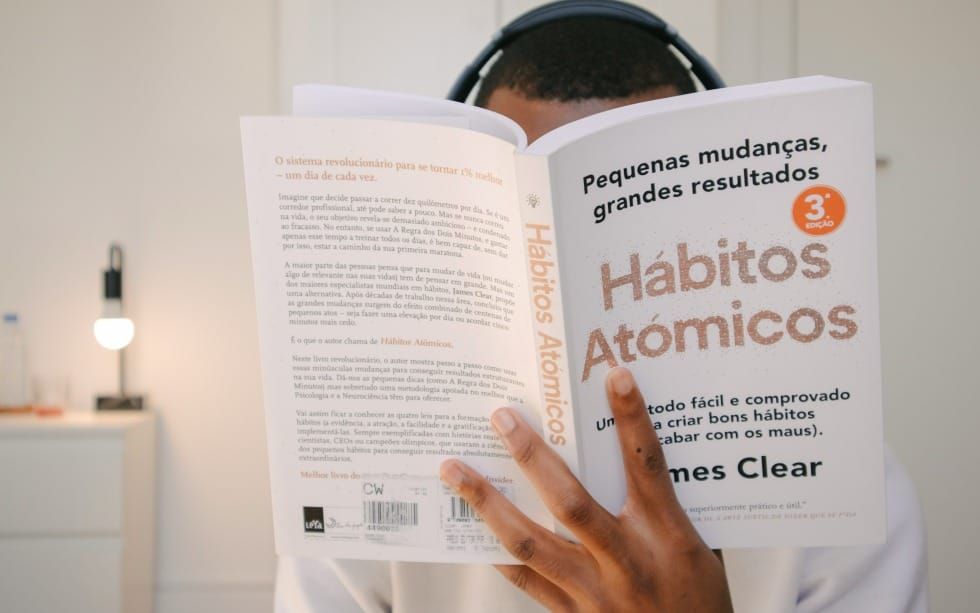
One of the perks of ghostwriting is you get to talk to cool people. Yesterday morning, I spent a few minutes speaking with Blake Atwood, an editor who worked on James Clear’s Atomic Habits.
In this book, Clear introduces the concept of habit stacking, a strategy for building new habits by anchoring them to existing ones. The idea is to pair a desired habit with a current, well-established habit to create a trigger for the new behavior.
For example, if you want to start journaling, you could decide to do it immediately after brushing your teeth. This approach leverages the momentum of your established routines to seamlessly integrate new habits into your daily life. As Clear writes,
Habits are the compound interest of self-improvement. The same way that money multiplies through compound interest, the effects of your habits multiply as you repeat them. They seem to make little difference on any given day and yet the impact they deliver over the months and years can be enormous. It is only when looking back two, five, or perhaps ten years later that the value of good habits and the cost of bad ones becomes strikingly apparent.[1]
The idea is to make small, sustainable changes over time.
So, How Do I Do This With Spiritual Disciplines?
When it comes to building spiritual disciplines, I’ve found Christians tend to run in one of two directions. They either do nothing, or they try to do everything.
The first group says, “I’m too busy to develop the disciplines of prayer, meditation, or fasting. These will take too long and be too inconvenient.”
Group two says, “I want all of God that I can get, so I’m going to take my spiritual life seriously.” I’m going to go from zero to hero overnight. No praying to lots of praying, no fasting to exhaustion, no volunteering to giving up every spare hour.
The first group never gets started, and the second quickly stops.
A better approach is to start small and habit stack.
If you always get a cup of coffee in the morning, leave your Bible by the Keurig and read for ten minutes as you drink. If you always arrive fifteen minutes early to your construction site, sit in your truck and pray as you wait. If you already attend church on Sunday and there are two services, why not attend one service and serve in the other?
Through making these micro-adjustments, you take everyday activities and add lasting meaning to them. You’re not just going through your day from one task to the next. You’re pausing and adding healthy rhythms that help you see all of life as a sacred opportunity. Spiritual disciplines become joyful habits rather than frustrating obligations.
Sunday Christians show up to church and like the idea of saying they believe in God, but they have few structural spiritual disciplines in place. So they always flounder, taking one step forward and two steps back. Monday Christians live disciplined lives with the purpose of increasing their enjoyment of God and love for others.
Be a Monday Christian.
[1] James Clear, Atomic Habits: An Easy & Proven Way to Build Good Habits & Break Bad Ones (Penguin Publishing Group, 2018), 16.