Are You Willing to Suffer? (Matthew 16, Mark 8, and Luke 9)
Do you only want mountaintop moments with Jesus? He was glorified above but walked down to suffer. Following him means walking the harder path.

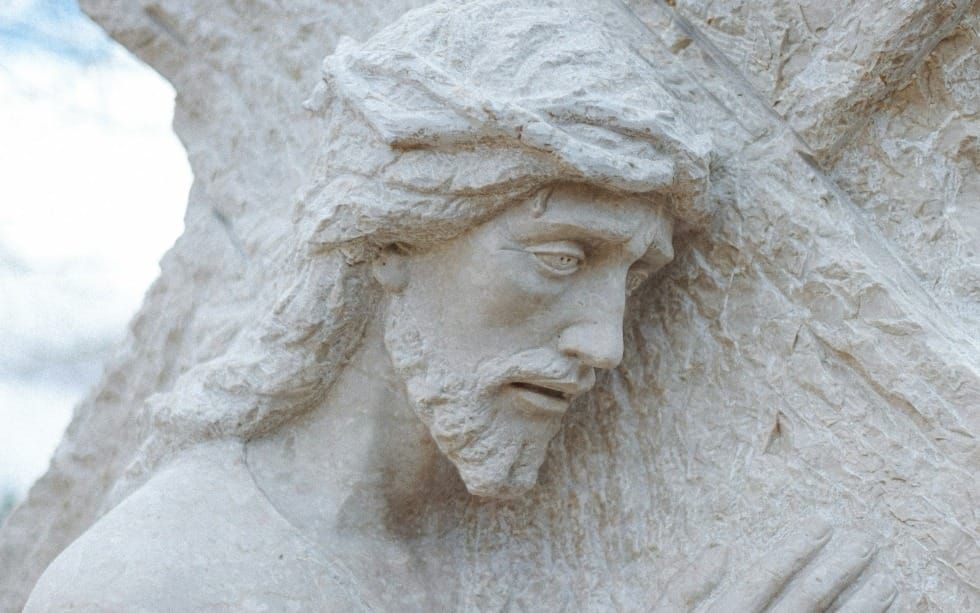
Matthew 16:1-17:13; Mark 8:11-9:13; Luke 9:18-36
Today's Scripture Passage
❤️ Enjoy what you’re reading?
Consider supporting The Monday Christian. For a dollar a month, given as a simple one-time donation, you help keep this ministry free and growing for every reader.
Support TMCA Few Thoughts to Consider
Do you despise the thought of shame and suffering?
In Matthew 16, we see this powerful contrast between the heavy call to discipleship and the weight of Christ’s glory revealed. In Matthew 16:24, Jesus says to his disciples, “Whoever wants to be my disciple must deny themselves and take up their cross and follow me.” Deny, take up, and follow. These are the three prerequisites for being a follower of Christ. Jesus continues and says, 25 “For whoever wants to save their life will lose it, but whoever loses their life for me will find it. 26 What good will it be for someone to gain the whole world, yet forfeit their soul? Or what can anyone give in exchange for their soul?”
From there, Jesus takes Peter, James, and John to a high mountain—likely either Mount Tabor or Mount Hermon, and both provide a beautiful picture of Galilee. As they are on this mountain, Matthew 17 says Jesus was “transfigured in front of them, and his face shone like the sun; his clothes became as white as the light.” The verb translated “transformed” is from the Greek word “metamorphosis,” which is where we get the word “metamorphosis.” It “suggests a change of inmost nature that may be outwardly visible.”[1]
There, Moses and Elijah appear, symbolizing Jesus’ fulfillment of the law and the prophets. Note that Moses had visions of the glory of God on Mount Sinai (Ex. 24:15), and Elijah had a vision of God on Mount Horeb (1 Kings 19:8-16). Elijah was taken to heaven, but Moses’ grave was never found.
Doing his best to make sense of a unique situation, Peter rambles and says, “Lord, it’s good for us to be here. If you want, I will set up three shelters here: one for you, one for Moses, and one for Elijah.” To this, he receives no response. But what happens next shocks all three disciples. Matthew 17:5-6 says, 5 “While he was still speaking, suddenly a bright cloud covered them, and a voice from the cloud said, ‘This is my beloved Son, with whom I am well-pleased. Listen to him!’ 6 When the disciples heard this, they fell facedown and were terrified.”
As he did before, Jesus calms their fears and tells them to get up and not be afraid. Jesus’ words as they’re coming off the mountain are especially significant. In verse 9, he says, “Don’t tell anyone about the vision until the Son of Man is raised from the dead.” Why? Because doing so would have sent the wrong message to the people who wanted a national Savior and liberator.
Yes, Jesus would be glorified and reign as king forever. But first, he would suffer great pain and expect his followers to do the same.
A Meditation to PRAY
Praise | Lord, I praise you for the glory revealed through Jesus on the Mount of Transfiguration, a glimpse of the divine majesty that lies beyond the suffering of the cross. You are the God who brings beauty out of ashes and transforms the shame of the cross into the hope of eternal life. I glorify your name for showing us the path to follow Jesus, even when it leads through trials and suffering.
Release | I release my fear of suffering and the desire to avoid the challenges that come with following Jesus. I let go of the need to seek only comfort and glory, understanding that true discipleship requires embracing the cross. Help me surrender my will, trusting that your strength will sustain me through every trial.
Ask | I ask for the courage to take up my cross daily, to deny myself, and to follow Jesus wholeheartedly, no matter the cost. Grant me the wisdom to see the glory in the cross and the cross in the glory so that I may walk faithfully in the footsteps of my Savior. Strengthen my heart to endure suffering with the hope of the eternal glory that awaits.
Yield | I yield my life to your will, accepting the call to discipleship with all its demands and challenges. I commit to follow Jesus wherever he leads, trusting in your promise that the present sufferings are not worth comparing to the glory that will be revealed. I surrender my life, knowing that in losing it for Christ, I will find it eternally in you.
A Challenge to Act Like Christ
We see this wonderous assortment of parallels when we compare Christ’s crucifixion with his transfiguration. As N.T. Wright points out,
The scene at the transfiguration (as it’s normally called) offers a strange parallel and contrast to the crucifixion (Matthew 27.33–54). If you’re going to meditate on the one, you might like to hold the other in your mind as well, as a sort of backdrop. Here, on a mountain, is Jesus, revealed in glory; there, on a hill outside Jerusalem, is Jesus, revealed in shame. Here his clothes are shining white; there, they have been stripped off, and soldiers have gambled for them. Here he is flanked by Moses and Elijah, two of Israel’s greatest heroes, representing the law and the prophets; there, he is flanked by two brigands, representing the level to which Israel had sunk in rebellion against God. Here, a bright cloud overshadows the scene; there, darkness comes upon the land. Here Peter blurts out how wonderful it all is; there, he is hiding in shame after denying he even knows Jesus. Here a voice from God himself declares that this is his wonderful son; there, a pagan soldier declares, in surprise, that this really was God’s son.[2]
The problem with much modern Western Christianity is that it tries to lean into the mountaintop of glory and avoid the mountaintop of shame. Joy, yes; suffering, no. But Jesus made it clear that those who follow him must take up their crosses, deny themselves, and follow him—often into great peril. Why should they do this? Because this is how God shapes their character, and the reward for doing so is great.
Romans 8:18 says, “For I consider that the sufferings of this present time are not worth comparing with the glory that is going to be revealed to us.” Hebrews 12:2 says of Jesus, “For the joy that lay before him, he endured the cross, despising the shame, and sat down at the right hand of the throne of God.”
Suffering and glory are intertwined. You cannot have one without the other. Wright says, “Learn to see the glory in the cross; learn to see the cross in the glory; and you will have begun to bring together the laughter and the tears of the God who hides in the cloud, the God who is to be known in the strange person of Jesus himself.”[3]
If you are serious about following Christ, you will suffer. This isn’t something you should fear or revel in, but it is something you should embrace. If you are suffering today, don’t rush the work God is doing in your life. Lean into his grace. Ask him to mold your character in ways that wouldn’t happen if life was great.
*Unless you specify otherwise, comments and questions you ask may be featured in upcoming podcast episodes.
[1]D. A. Carson, “Matthew,” in Matthew & Mark, vol. 9 of The Expositor’s Bible Commentary Revised Edition. eds. Tremper Longman III and David E. Garland; Accordance electronic ed. (Grand Rapids: Zondervan, 2010), 437.
[2]N. T. Wright, Matthew for Everyone Part 2 Chapters 16–28, vol. 2 of Accordance electronic ed. (Louisville: Westminster John Knox Press, 2011), 14.
[3]N. T. Wright, Matthew for Everyone Part 2 Chapters 16–28, vol. 2 of Accordance electronic ed. (Louisville: Westminster John Knox Press, 2011), 15.