Why Good Roofs Aren't Flat
We all want a comfortable life, but the truest reminders of where our hope comes from are usually found in times of difficulty, for it's then that we're reminded to be still and know who God is.

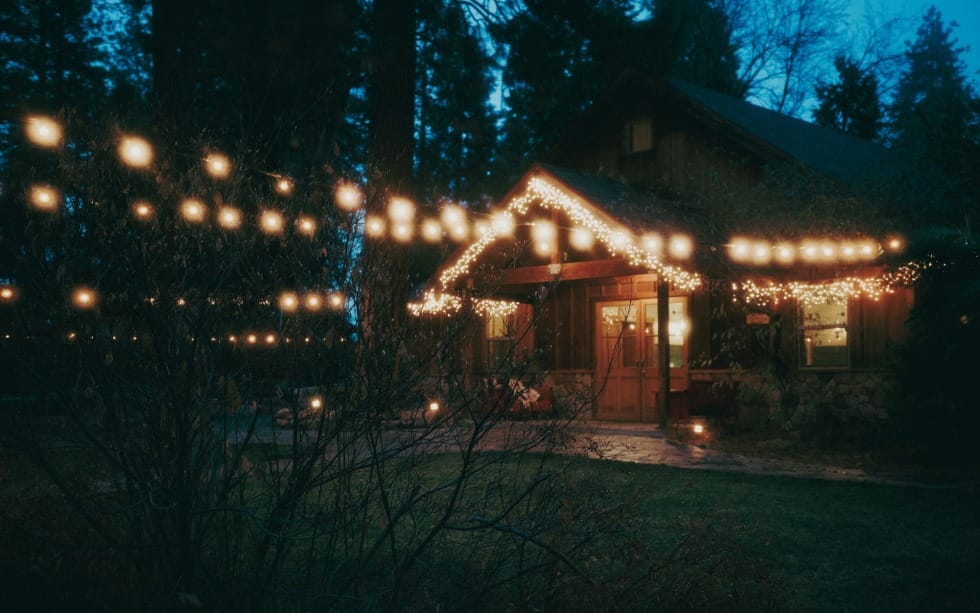
For me, the best day of the year (Christmas) will always be preceded by the worst: the day I climb onto the roof to hang Christmas lights.
It always starts with me standing at the base of the ladder thinking, well, I’ve lived a good life. I updated my life insurance before going up this year, just in case. As miserable as the whole experience is for me, though, even good can sometimes come from dangerous traditions. Let me explain.
The Shaky Climb
My process is incredibly predictable by now. I’ll step onto the ladder, shaky and self-conscious. A car drives by and I freeze, pretending to check something on the house so no one can see how terrified I am. Eventually, I reach the slanted roof and have to pull myself onto it without falling off the edge. My wife laughingly affirms that I look like a baby trying to find its feet for the first time. My tottering isn’t nearly as cute.
Once I’m up there, the real frustration kicks in, because something always goes wrong in those first fifteen minutes. This year, shortly after starting, I dropped my strand and five bulbs I’d attached came tumbling off the house. I know that doesn’t sound like a lot, but it’s moments like that when everything feels infinitely worse than it actually is. My mind magnifies the annoyance because I’m flustered, tense, determined to get the whole thing over with as quickly as possible. Everything becomes a storm when you’re already anxious.
After dropping the strand, I took a breath. I looked down. I saw my kids in the yard. My oldest was laughing and spinning in circles, oblivious to my dire circumstance. And something reoriented inside me. I remembered why I was up there. I remembered who the lights were for. My wife often reminds me of a quote from a sermon we once heard: You can’t feel anxious and thankful at the same time. Gratitude doesn’t erase the slope of the roof or the risk of falling. But when thanksgiving takes the lead, anxiety loses its power.
Stillness in the Storm
Psalm 46:10 says, “Be still, and know that I am God.” There’s a reason the verse begins with be still. When fear is loud, when a situation is frustrating, stillness feels impossible. Our minds spin, our hearts race, and everything inside us says: Hurry! Go! Get it done already!
But God says: Stop striving. Stop acting like it all depends on you. Stop rushing through the moments you want to escape. Be. Still. In spiritual terms, it’s an invitation to stop trying to save ourselves. That job is already taken. We forget that grace has covered what our efforts never can. We forget that God isn’t waiting for us to solve our way into peace. Stillness gives us space to remember.
And that leads to the second part of the verse: Know that I am God. This is the re-centering. The shift from self-effort to God-awareness. It doesn’t matter what the neighbors think of my wobbly roof ascent. It doesn’t matter how competent I appear or how quickly I get the job done. What matters is who God is—and who He’s shaping us to become.
Why I’ll Keep Getting up on that Roof
It’s tempting to pray that storms would simply vanish. That the roof would flatten, the ladder would steady, the bulbs would magically stick themselves. I complain every time I get on that roof. But the look on my three-year-old’s face when the lights finally flicker on? That moment, that recentering on what really matters, makes the ordeal worth it.
Peace doesn’t come from everything going smoothly. A comfortable life rarely reminds us where our hope comes from. Storms do that. Frustrating situations do that. Even putting up the Christmas lights does that. They remind us that hope is not something to be frantically chased. It’s something we’ve already received. We just need to slow down and remember.
If we wait for circumstances to calm before seeking peace, we’ll never find it, because our hope doesn’t rest in circumstances. It rests in the God who reigns above it. Be still. Know that He is God. And let gratitude – not anxiety – lead our hearts.