
When the Wicked Flourish and the Faithful Wait
Faithfulness doesn't always end in desired circumstances: when we see unbelievers prospering while we wait, our hearts can be tempted to envy or resent their prosperity. Psalm 73 calls us to worship the only One who can satisfy, even in the waiting.

Have you ever grown weary of watching the “wicked” prosper?
That was exactly how I felt while watching the action K-drama, Bloodhounds, recently. Watching each episode, I saw everything fall effortlessly into place for the antagonists while the protagonists faced one setback after another.
I sat at the edge of my seat praying that the protagonists would finally get a breakthrough—and yes, I knew my prayers weren't going to change a scripted TV show, but I was so invested that it felt like the only thing I could do! Watching those who pursued righteousness continually suffer, while seeing those who committed evil continue to thrive, stirred something deeper within me.
Yet, this experience isn’t simply confined to TV shows. For many believers, this is a deeply personal experience that exposes a question hidden in our hearts: Why do the wicked continue to prosper while those who seek to honor the Lord face persistent struggles?
This has been especially true for my husband and me as we navigate walking through infertility. Witnessing family members, friends, and colleagues who have openly rejected Christ and live in ways that disregard Him welcome a new child into their families has often pushed me to a place of deep sorrow and bitterness. I found myself asking God why becoming a parent seemed to fall right into their hands, while the wait seemed endless for us as we continued to pray and honor Him.
Without realizing it, my pain slowly evolved into envy. My heart led me to believe that they were less deserving of children than we were, that it should have come easily to us because we consistently chose to live upright before Him.
This shift was dangerous because it quietly replaced God’s grace with my own sense of justice. When I vocalized my internal wrestling to my husband, he gently reminded me of a truth I needed to hear: God does not provide children as a reward for our self-righteousness. He gives because He is good.
His words brought me back to the confession of Asaph, the Psalmist, in Psalm 73:13:
“Surely in vain I have kept my heart pure and washed my hands in innocence.”
I quickly felt humbled when I realized my theology had unknowingly shifted toward a transactional view of God. Somewhere in my waiting, I had begun to believe that faithful obedience would guarantee my desired outcome. My envy distorted my understanding; it convinced me that God’s goodness was earned rather than graciously given.
Psalm 73 is deeply honest because it exposes that tendency in all of us. Asaph’s inner turmoil begins with confusion but ends in worship. His circumstances do not change—his perspective does.
The Threads That Shape Us
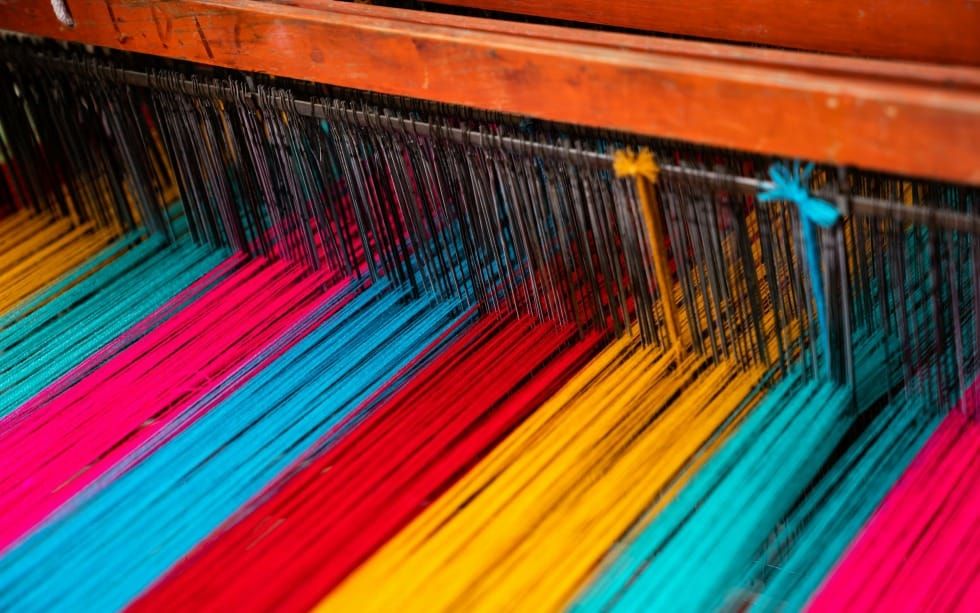
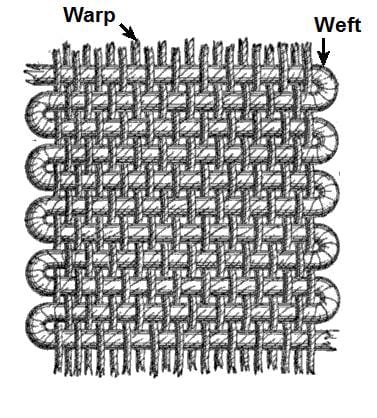
Recently, during a chapel devotional, one of my professors, Dr. Kern Stanberry, used the imagery of a tapestry to help understand this psalm. He shared that a tapestry is held together by two kinds of threads: the warp and the weft.
The warp consists of the strong vertical strands stretched tightly across the loom. Though it is unseen once the tapestry is complete, it remains fixed and provides the foundation on which everything else is woven. Dr. Stanberry described the warp as the core human needs that God has woven into every person—our deep longings for love, acceptance, belonging, significance, security, purpose, etc.
On the other hand, the weft shows a different picture (quite literally). It is the horizontal threads that pass back and forth through the warp, gradually forming the visible image of the tapestry. My professor shared that the weft symbolizes “the means that we use to satisfy the deep longings of our warp.”[1]
Every day, whether we realize it or not, we are weaving something into our lives. Achievements, relationships, approval, success, financial security, ministry, family; they all become threads that we try to use to satisfy the longings of our warp.
Because of our fallen nature, we instinctively search for fulfillment apart from God. John describes these as "the lust of the flesh, the lust of the eyes, and the pride of life" (1 John 2:16). We weave with these threads and convince ourselves that if we can weave enough of the right colors into our lives, then maybe we will finally feel secure, significant, accepted, and whole.[2]
None of the things listed above are inherently bad things; the problem begins when gifts slowly become substitutes for the Giver. That is exactly where Asaph found himself and, truthfully, where I also have found myself one too many times.
When Worship Reweaves Our Heart
At first glance, Psalm 73 seems to be about envying the prosperity of the wicked. However, beneath the surface, the picture of envy in Asaph reveals something deeper: he had begun to believe that God's blessings would satisfy his heart. So, when the wicked prospered while he suffered, the tapestry he had been weaving began to unravel.
"Surely in vain I have kept my heart pure..." (Psalm 73:13)
His obedience had quietly become transactional. So had mine.
Infertility did not create the deepest longings of my heart; it simply revealed them. Over time, I realized I had begun looking to motherhood for a sense of fulfillment, identity, and security that it was never meant to provide. Without realizing it, I had placed a weight on this good gift that only Christ was ever meant to deeply satisfy.
One of the most encouraging truths my professor shared is that God does not wait for us to present Him with a perfectly woven tapestry. He meets each of us in what Dr. Stanberry calls our "uniquely and subjectively current fabricated self"[3] and lovingly begins the work of transformation, "undo[ing] our neatly fastened wefts, one yarn at a time."[4]
Asaph experienced this too. For him, everything changed with one word:
"Until I entered the sanctuary of God..." (Psalm 73:17)
Asaph's circumstances did not immediately change. The wicked still prospered, and his suffering did not disappear. What changed was his worship. In God's presence, the false threads he'd been holding onto were slowly unraveled, and his deepest longings were redirected toward the only One who could truly satisfy them. He no longer focused on what he lacked, but declared:
"Whom have I in heaven but You? And there is nothing on earth that I desire besides You. My flesh and my heart may fail, but God is the strength of my heart and my portion forever" (Psalm 73:25–26).
As I write this, my own circumstances have not changed. My husband and I are still waiting, and there are days when envy quietly creeps and twists into my heart. Yet I can also see that God is patiently undoing the threads I've woven from misplaced hope and gently reweaving my heart around Him. Children are a beautiful gift, but they were never meant to be my identity, my security, or my portion. Christ is.
The warp has never changed. Christ has always been enough to hold the weight of my deepest longings and yours. When He becomes our portion, the tapestry of our lives is no longer defined by whether we receive the gifts we long for, but by the faithfulness of the God who is patiently weaving us to be fully satisfied in Him.
[1] Kern Orbin Stanberry, An Integrative Model of Spiritual Formation: Incorporating Practices from Christian Spirituality and Psychotherapy (DMin portfolio, Tyndale University, 2020). I first encountered these concepts during Dr. Stanberry's chapel devotional on June 4, 2026, and quote his devotional here with permission.
[2] Ibid.
[3] Ibid.
[4] Ibid.