Lent: Diplomatic Immunity in a Rival Kingdom
Lent is a time to give something up as a reminder of where our true allegiance lies, and to redefine where our hopes truly lie.

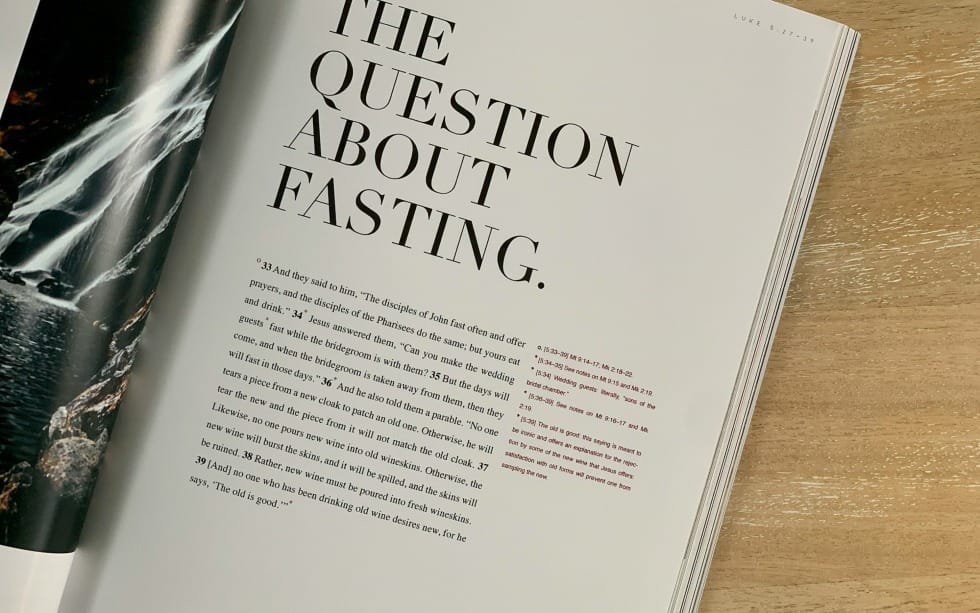
“What did you give up for Lent?”
It was a question I heard as a child growing up around a Catholic friend. At first, I wasn’t even sure what giving something up had to do with the “lint” my mom pulled from the dryer each week. And besides, I was a proud Protestant—we didn’t give up anything!
Over time, however, as I’ve walked alongside believers from traditions outside my own, I’ve come to appreciate the depth and beauty of the Lenten season. Lent is about giving something up to remind ourselves that our dependence is on God Himself. It’s not about religious performance. It is a season of preparation—a deliberate journey toward the greatest celebration for all who follow Jesus: Resurrection Sunday.
Deprivation or Reorientation?
To set aside something we’ve grown accustomed to—or even become dependent upon—is not about deprivation. It is about reorientation. The act of saying “no” to something we find comfort in can help us remember who truly feeds us, sustains us, and completes us. It shifts our gaze from the temporary to the eternal.
For me, the habit that would be hardest to surrender isn’t chocolate or coffee. It’s the 24/7 news cycle. Breaking news from multiple sources takes up a good portion of my day. I want to know who’s getting along and who’s not, and I want to understand how markets are responding and how policies are shifting in response.
Many can simply read the news and move on, but for me, this habit locks me into the present moment in a way that often crowds out an eternal perspective. It keeps my attention fixed on instability rather than God’s sovereignty. Easter reminds me that all I see is not all that is. This unstable world we live in is a rival to the world that awaits us when we experience resurrection.
Easter declares something radically stabilizing. No matter how chaotic the world appears, God is still on His throne. Politicians are not sovereign—Christ is. Evil does not have the final word—Jesus does. The resurrection announces that death itself has been defeated, and a new kind of life has broken into the present, and Lent gives us all an opportunity to remind ourselves of this amazing promise.
Anticipating the resurrection means we will look at what Jesus did after His resurrection. He showed up at meals. He physically touched people. He cooked breakfast. He reasoned and taught. He restored relationships. He challenged His friends to deeper faith. His resurrected life was not abstract or ethereal—it was embodied, relational, and purposeful. This is the life we look forward to in a world that completely aligns with God’s Kingdom rule and reign.
A Deeper Reliance
The resurrection not only secures our future; it transforms our present. It enables us to live a new kind of life in the here and now—a life not dependent upon or defined by the shifting realities of this world. When I lay aside something I’ve grown reliant upon during Lent, I am reminding my heart that my true reliance is on the One who has overcome the world.
I am reminded of the Apostle Paul’s experience in Philippi. After receiving a vision of a man from Macedonia pleading, “Come over and help us,” Paul traveled to that Roman colony. There, he met Lydia by the river—a woman whose heart the Lord opened to respond to the gospel. Her household was baptized, and a church was born.
But the work of God did not unfold without resistance. After confronting spiritual darkness and economic exploitation, Paul and Silas were beaten and imprisoned. Yet even in jail, God was at work. A miraculous release led to the conversion of the jailer and his family. The church in Philippi began to grow—but it also began to experience tension, opposition, and internal struggles. So, Paul wrote to them.
For, as I have often told you before and now tell you again even with tears, many live as enemies of the cross of Christ. Their destiny is destruction, their god is their stomach, and their glory is in their shame. Their mind is set on earthly things. But our citizenship is in heaven. And we eagerly await a Savior from there, the Lord Jesus Christ, who, by the power that enables him to bring everything under his control, will transform our lowly body so that it will be like his glorious body. – Philippians 3:18–21
Diplomatic Immunity
Paul’s words are both sobering and stabilizing. When our minds are set exclusively on earthly things—when satisfying immediate desires becomes our guiding principle—we subtly declare that the temporary is ultimate. But our citizenship is in another kingdom. Heaven grants us our identity, our security, and our ultimate rights. In that sense, we live with a kind of holy “diplomatic immunity.” We reside in a world often hostile to the values of the kingdom of God, while our primary allegiance lies elsewhere.
Lent, then, becomes more than tradition. It becomes training. When we fast from something that subtly masters us—news, comfort, convenience, entertainment—we loosen our grip on what is temporary and strengthen our attachment to what is eternal. We remember that we are not defined by the noise of the moment. We are defined by the victory of Christ. It also reminds us that the chaos doesn’t win, and it steadies our hearts with an unshakable (even victorious) hope.
What earthly attachment is quietly shaping your identity more than your heavenly citizenship? What will you give up for Lent?